
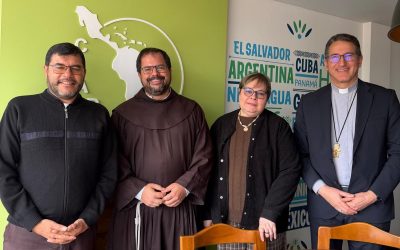
Daniel Portillo and Patricia Espinosa
During the month of November two Safeguarding activities took place in Venezuela: November 4 to 15 an online course on abuse prevention and safeguarding policy development in dioceses and congregations; November 28 to 30 The II Meeting of diocesan commissions entitled “The Culture of Good Treatment, Safeguarding and Prevention.”
A two-week Diploma to embed safeguarding protocols in diocese and congregations
A diploma course was organized by the Venezuelan Episcopal Conference, the Venezuelan Conference of Religious (CONVER), the Institute of Theology for Religious of Venezuela (ITER) and CEPROME Latin America. The main theme was “Prevention of Abuse and the need for Protocols and Codes in Dioceses and Congregations.” Participants in the diploma course included representatives of the diocesan and religious safeguarding commissions.
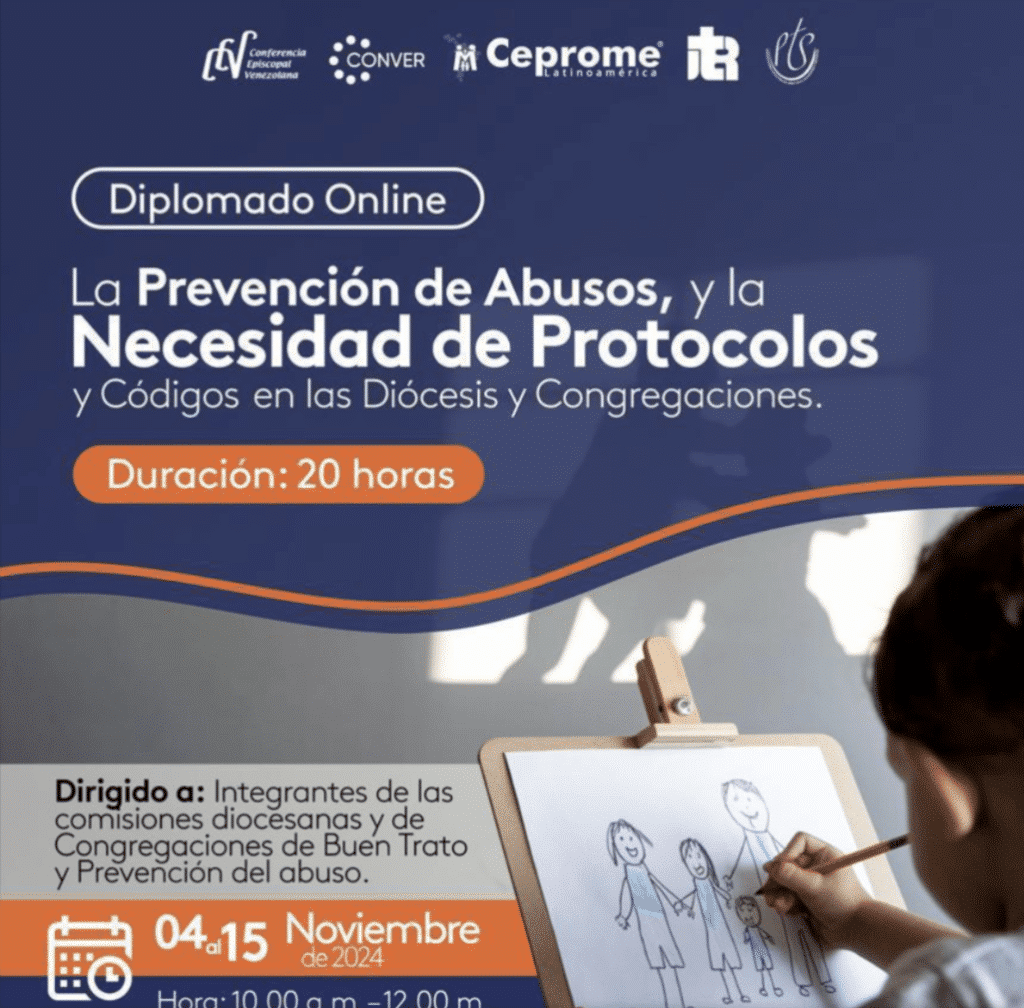
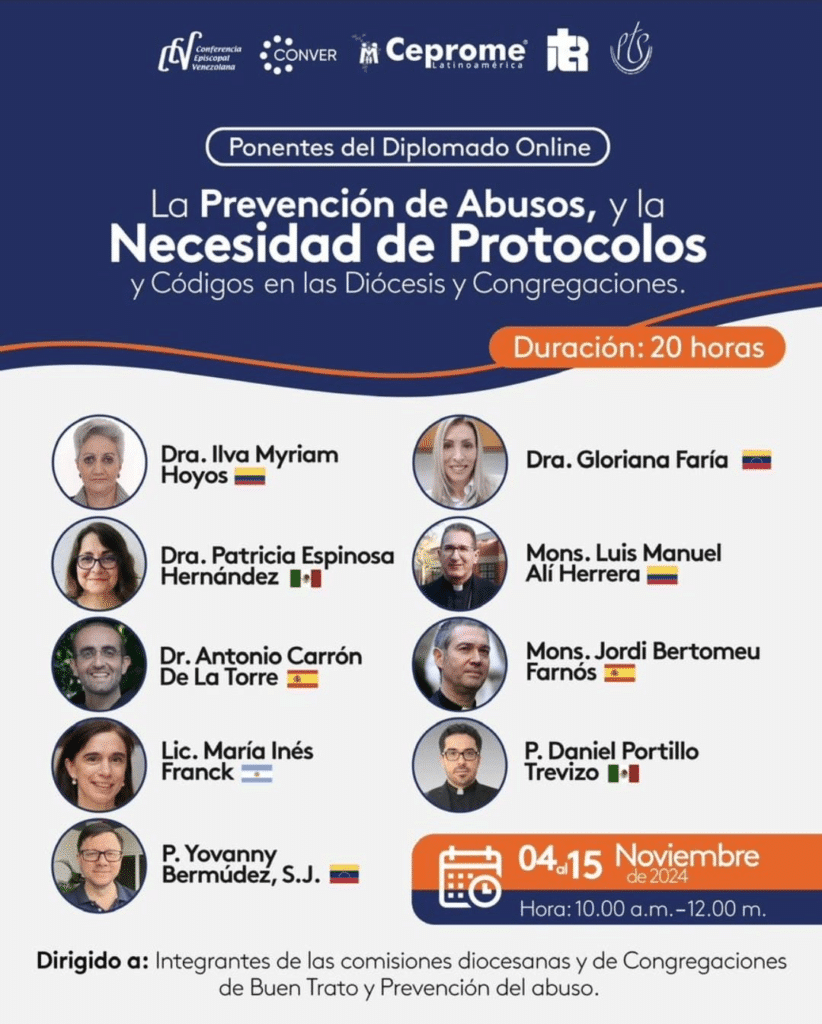
Speakers included the Secretary of the Pontifical Commission for the Protection of Minors, Bishop Luis Manuel Alí Herrera, Commission Policy expert Dr. Inés Franck, and Commission member and Psychiatrist, Dr. Patricia Espinosa.
Dr. Espinosa stated that: “Every time I speak about the protection of the most vulnerable, I feel that I am not only sharing information, knowledge or professional experience, but that I am joining a community united by faith.”
Referring specifically to the course in Venezuela, she underlined the extremely complex and challenging socio-political context of the country and how the participants, both lay people and priests and religious “demonstrated great commitment to the Church and capacity to overcome obstacles.”
The work was centered on two main objectives: the prevention of further abuse and the commitment to accompany victims/survivors and their families. In the context of Venezuela this Safeguarding effort had to be carried out not only in a spirit of collaboration but of strong faith: “Together, we align our actions with the mission of the Church, always seeking the well-being of those we serve”, said Patricia Espinosa.
Dr. Espinosa concluded: “This work of safeguarding becomes even more meaningful, for it reminds us that the strength of the Church relies not only in doctrine, but in the ability of its members to face adversity with hope and determination, always driven by shared love and faith.”
A three-day meeting of Diocesan Commissions in Caracas to share experiences
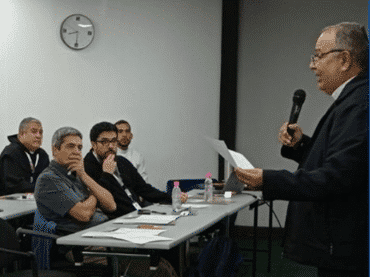
63 participants from 27 diocese of Venezuela presented the progress made on the implementation of protocols, the work of local commissions and the training activities carried out during the year 2024, at the II Meeting of Diocesan Commissions for the culture of care, safeguarding and prevention.
Two keynote speakers guided their reflections. Father Daniel Portillo, the Pontifical Commission for the Protection of Minors’ regional expert for the Americas spoke about the Institutional Response to Abuse in the Church. Father Luis Zamorano, expert in psycho-spiritual accompaniment of victims and survivors offered a reflection on the Psycho-spiritual Challenges of Accompaniment.
The workshop took place at Monsignor Ibarra House in Montalbán (Caracas), from November 28 to 30. This event was organized by the National Commission of Good Treatment, Safeguarding and Prevention, presided by Monsignor Angel Caraballo, Bishop of Cabimas, together with Fra Eddy Polo, president of the Conference of Religious Men and Women, CONVER.
The main scope of this meeting was to strengthen the culture of safe environments within the Church through sharing experiences on the real achievements and difficulties in local churches, and to reflect and evaluate together the activities carried out during 2024, to develop new actions.
The closing session was chaired by the Msgr. Alberto Ortega, who first met with the members of the National Commissions of the Episcopal Conference and the Confederation of Religious of Venezuela. The members of all the Commissions around the country shared their conclusions and expectations for the year 2025, and after they all gathered for the closing Eucharist.
It is remarkable that all the members of the Safeguarding Commissions in Venezuela work as volunteers, without receiving any economic remuneration for it, including visits to the different parishes using their vehicles or collective means of transportation.
As Fr. Daniel Portillo stated: “In spite of all the difficulties the country is facing, among them the scarcity of fuel and the low purchasing capacity of the population, it was humbling to see the outstanding commitment of all the volunteers of the dioceses who sacrificed many things for this mission in their local church.”
0 Comments