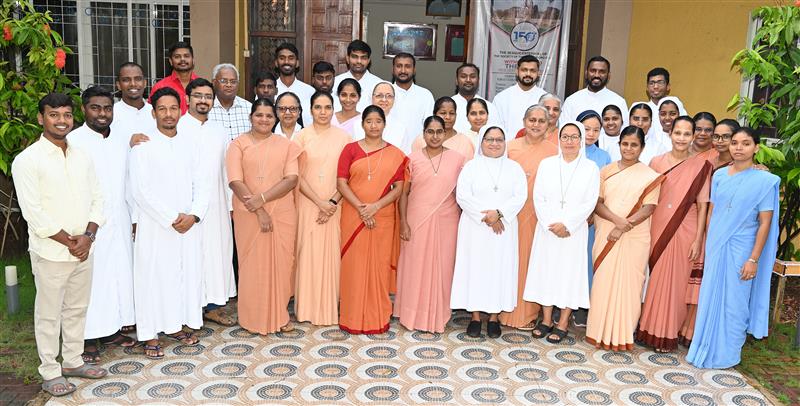
PUNE, India — A two-day safeguarding workshop focused on the sexual abuse of minors and vulnerable persons was held at Ishvani Kendra in Pune, Maharashtra, drawing religious participants from across five continents.
The Divine Word Missionaries (Society of the Divine Word, SVD) are a global Catholic missionary congregation founded in 1875 by St. Arnold Janssen. Today, around 6,000 priests and brothers serve in over 75 countries. They live among the poor and marginalized—children, victims of abuse, refugees, people with AIDS and those in slums—striving to bring education, healthcare, spiritual care, and social justice.
Their work with vulnerable children is especially vital: they run orphanages (including homes for children orphaned by AIDS), tutor youth in rehabilitation centers, staff bridge schools to bring children into formal education, and counsel victims and survivors of abuse.
In short, Divine Word Missionaries live the Gospel among the most at-risk populations, offering spiritual witness through prayers and sacraments, while responding to tangible needs—education, food, healing, reconciliation—empowering vulnerable people to rebuild lives with hope and dignity.
Organised by Fr. Mathew Kavukatt, SVD, Programme Coordinator at Ishvani Kendra, the sessions were led by Sr. Arina Gonsalves, RJM, a member of the Commission and Executive Secretary of the St. Joseph’s Safeguarding Centre in Mumbai. The intensive programme ran from 9:00 a.m. to 4:00 p.m. on both 17 and 18 June, with scheduled tea and lunch breaks.
Over the course of the two days, 41 participants attended the sessions. The group included religious priests, brothers, and women religious, many of whom are currently serving in mission contexts in Australia, Belgium, Cameroon, Chile, Egypt, Ecuador, France, Germany, Ghana, Guyana, Hungary, Italy, Israel, Ireland, Nigeria, Spain, Sierra Leone, Taiwan, Timor Leste, the United States, Vietnam, West Africa, the West Indies, Zambia and Zimbabwe.
Six thematic areas were addressed throughout the training: abuse in civil society; sexual abuse within the Catholic Church; the framework of Vos estis lux mundi; the role of artificial intelligence in digital abuse; the long- and short-term effects of abuse, including spiritual harm; and safeguarding as it relates to mission. Each presentation was followed by group discussions and summary reports presented by participants. On the final day, case studies were introduced, allowing participants to engage directly with simulated safeguarding challenges.
On the morning of Wednesday, 18 June, the participants offered the Eucharist for victims and survivors of sexual abuse in the Church. The gesture was seen as a significant moment of shared reflection and prayer.
Fr. Kavukatt expressed his gratitude to Sr. Gonsalves following the programme, noting that participants had described the sessions as timely, practical and deeply meaningful for their ministries.
The training reflects a continuing global effort by the Church to prioritise safeguarding education—especially among those serving in frontline pastoral and missionary roles.
0 Comments