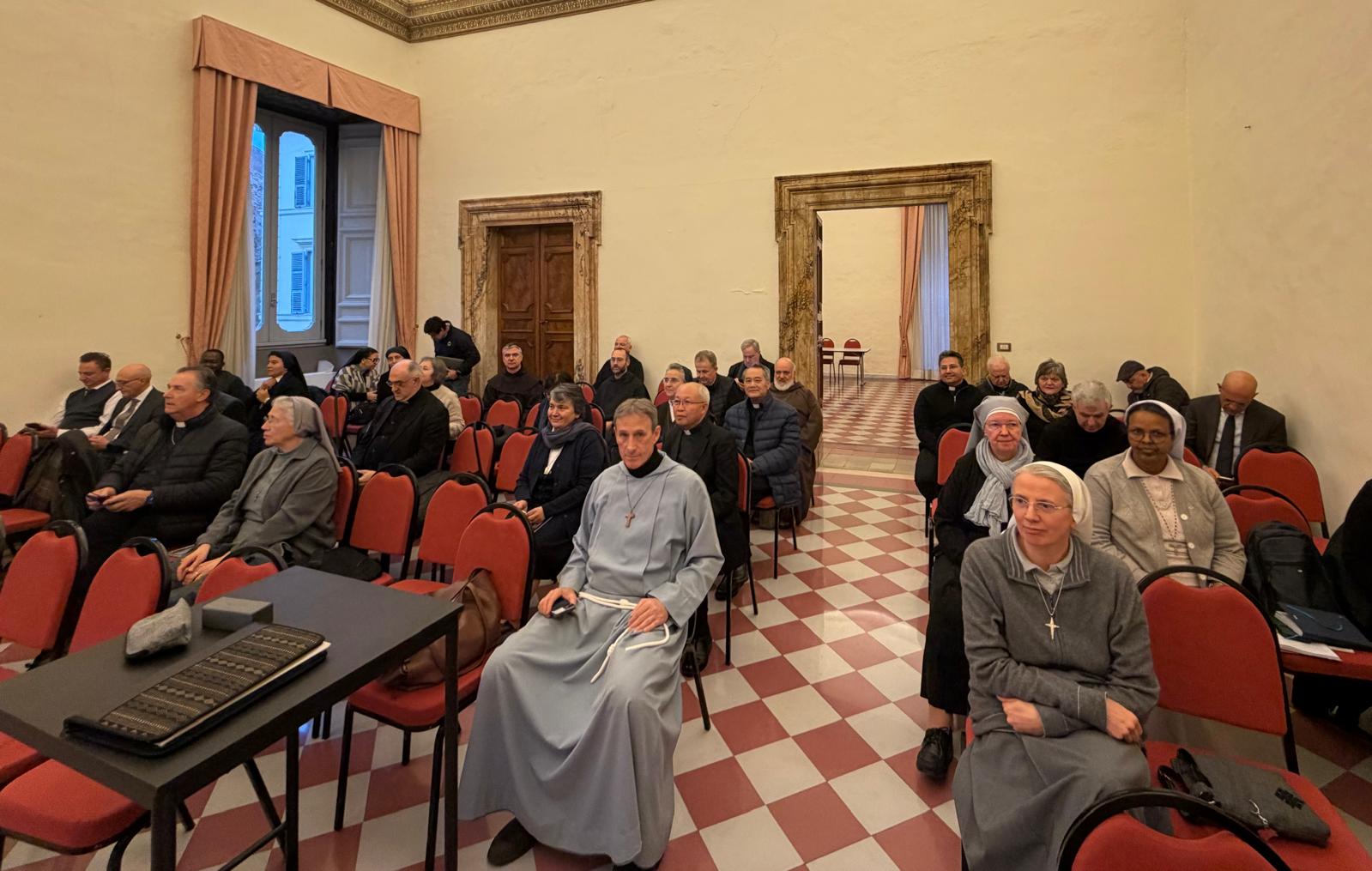
VATICAN CITY – A new training programme focused on workplace wellbeing and emotional safety has been launched for staff of the Dicastery for Institutes of Consecrated Life and Societies of Apostolic Life (DIVCSVA), following a formal request from the Dicastery for specialised formation.
The initiative, titled Lavoriamo al sicuro – La promozione del benessere lavorativo per la qualità del servizio professionale (Working Safely – Promoting Workplace Wellbeing for the Quality of Professional Service), was developed in response to the complex and often demanding nature of the work carried out by DIVCSVA personnel.
The competence of the DIVCSVA is to promote, encourage and regulate the practice of the evangelical counsels, how they are lived out in the approved forms of consecrated life and all matters concerning the life and activity of Societies of Apostolic Life throughout the Latin Church.
Participation in the programme has been extended to the entire Dicastery, involving approximately forty people, including the Prefect, Pro-Prefect, and leadership at all levels of the office.
The course, led by trauma expert, Dr. Rosanna Giacometto, is structured around three in-person sessions and combines theoretical frameworks with practical application and discussion.
The overall objective of the training is to provide participants with models for understanding stress and trauma in professional contexts where engagement with others’ suffering is central, while also offering tools to promote individual and organisational wellbeing. The guiding principle of the programme is caring for oneself while caring for others.
Through guided discussion, participants are encouraged to identify practical strategies to support both personal wellbeing and the quality of professional service.
Core themes addressed during the training include emotional safety in the workplace, stress and coping mechanisms, compassion fatigue, burnout, trauma and vicarious trauma, and resilience. Each session places particular emphasis on issues raised by participants themselves, allowing the content to be adapted to emerging needs and operational realities.
The training reflects a broader commitment to fostering safe and supportive working environments for those entrusted with complex pastoral and administrative responsibilities within the Suria at the service of the local Church.
0 Comments