Workshop for formators across East Africa tells future priests safeguarding is the mission of the church, in its seminaries and communities, and the church has the power to be the voice for victims of abuse.
Last October, the Association of Member Episcopal Conferences in Eastern Africa (AMECEA) launched a capacity-building initiative for formators in major seminaries across its member conferences as part of a two-year program to boost knowledge and awareness about the reality of the sexual abuse of children and vulnerable people.
The aim of the program is to provide key tools for proactive responses by church personnel in terms of intervention and prevention and to underscore the importance of fostering a safety-first culture during the early stages of priestly formation.
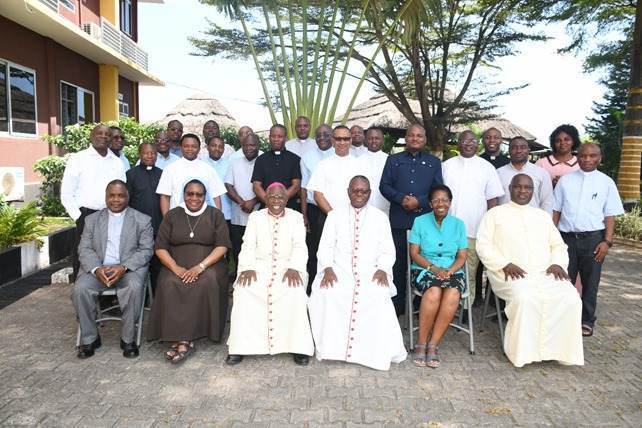
Sr. Annah Theresa Nyadombo, member of the Pontifical Commission for the Protection of Minors and Augusta Muthigani, regional expert of Africa led the Safeguarding formation for the seminarians.
Safeguarding as a Shared Responsibility

Rectors, spiritual directors, and formators from seven major seminaries under the Tanzania Episcopal Conference received intensive training. The focus was not only on raising awareness but also on identifying gaps in current practices and proposing actionable recommendations for improvement. By addressing these issues early, seminaries aim to ensure that future priests are well-prepared to protect children and vulnerable adults.
The workshop, opened by Rt. Rev. Severine Niwemugizi, Chair of the Committee for Child Protection at the Tanzania Episcopal Conference, reiterated the universal responsibility to safeguard children and vulnerable adults. He highlighted that clergy and religious leaders have a particular obligation to prevent abuse, both intentional and unintentional, and to ensure robust policies and systems are in place to mitigate risks.
“Safeguarding is the mission of the Church,” Rt. Rev. Niwemugizi emphasized. “We have the power to be beacons of hope and joy for those harmed by abuse. We must discuss child abuse and abuse against vulnerable individuals and act responsibly in addressing these issues. We must be the voice of the victims.”
Safeguarding as a Core Element of Priestly Formation

Rt. Rev. Rogath Kimaryo, who oversees AMECEA’s Pastoral Department, reminded participants of the profound responsibility they bear as formators. Future priests must not only embrace a culture of safety and accountability within seminaries but also into their pastoral ministry. He underscored the need for seminarians to see Safeguarding as an extension of Jesus Christ’s ministry—an invitation to protect and nurture the most vulnerable members of society.
Fr. Charles Kitima, Secretary General of the Tanzania Episcopal Conference, echoed this sentiment. He urged formators to foster a priestly ministry rooted in human dignity, repentance for past mistakes, and a commitment to moral integrity. By deepening their knowledge, preaching Safeguarding principles, and adhering to established standards, seminarians can contribute to a safer Church.
The topics covered in the training, including the growth and wellbeing of children, child rights perspectives, religious and legal foundations for Safeguarding, and signs of abuse. Other topics included the role of power dynamics, justice and care for abuse survivors, and the Memorare Initiative, which seeks to provide professional support for victims of abuse.
Participants also explored key Church documents such as Ratio Fundamentalis Institutionis Sacerdotalis, Book VI of Canon Law, and the Vos Estis Lux Mundi (VELM).
Recommendations: Building a Culture of Safeguarding

The seminarians who participated in the training offered several recommendations to ensure that Safeguarding becomes an integral part of seminary life and priestly formation. They wished to establishing Safeguarding clubs adn committees in seminaries, enhance learning resources, develop procedures to address abuse within seminaries, continue training formators, organise symposiums and meetings and, emphasise Christ-like priesthood.
As Fr. Kitima aptly stated, Safeguarding is about moving forward with humility and determination: “It is critical to acknowledge past mistakes, repent, convert, and move forward by doing what is morally right.”

0 Comments