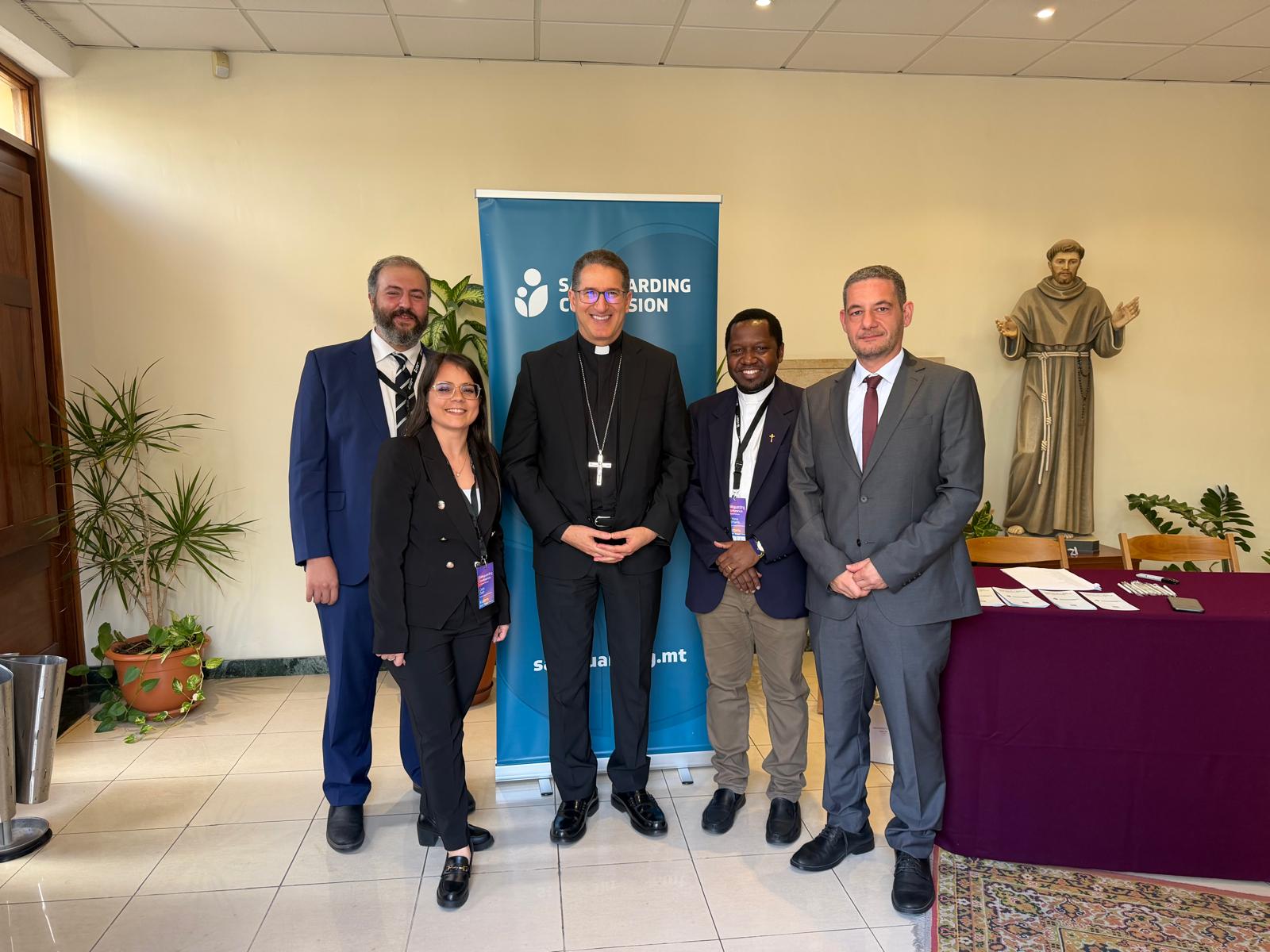
BIRKIRKARA, Malta — Commission secretary Mon. Luis Manuel Alí Herrera opened Malta’s national safeguarding conference on Thursday by urging Church and civil institutions to work more closely together in order to build what he called a “Community of Protection”.
The conference, titled Safeguarding: A Shared Mission, was hosted by the Archdiocese of Malta’s Safeguarding Commission at the Centru Animazzjoni u Komunikazzjoni in Birkirkara. It brought together Church leaders, government officials and safeguarding professionals from across Europe to discuss new approaches to child and vulnerable-adult protection.
Representing the Commission, Mons. Alí Herrera outlined three key pillars of the Church’s global safeguarding work: the Universal Guidelines Framework, the Annual Report and the Memorare Initiative. He said the framework was developed through worldwide listening sessions with survivors and faith communities, stressing that protection measures must be adaptable to local cultures and lived experience rather than imposed uniformly.
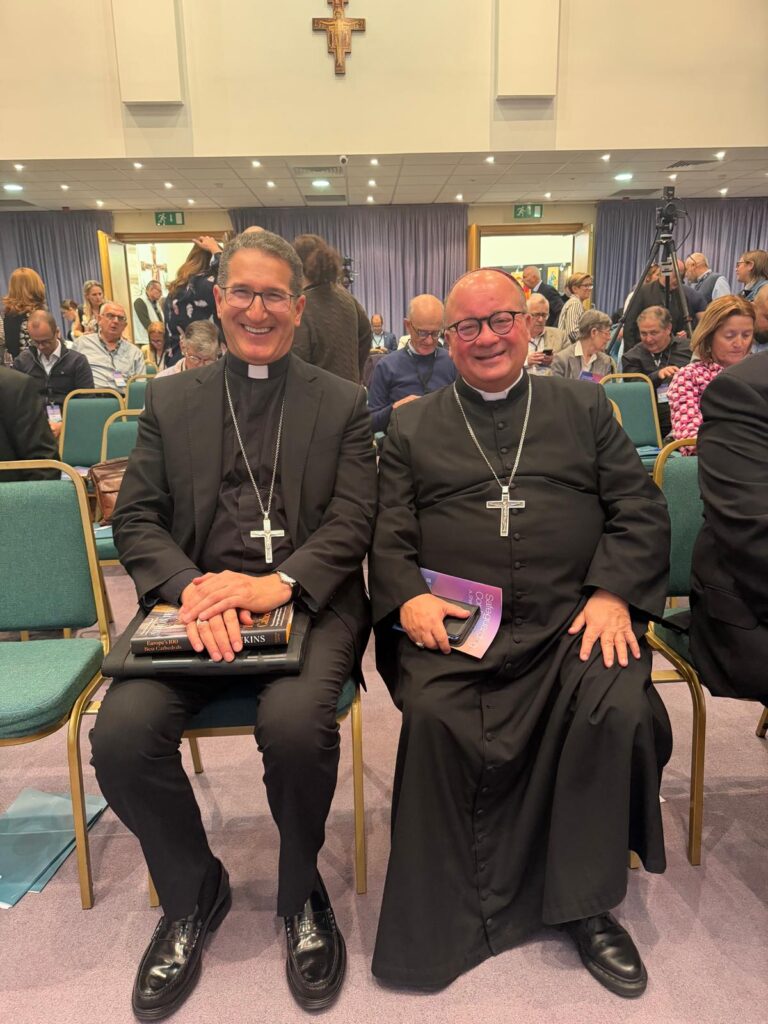
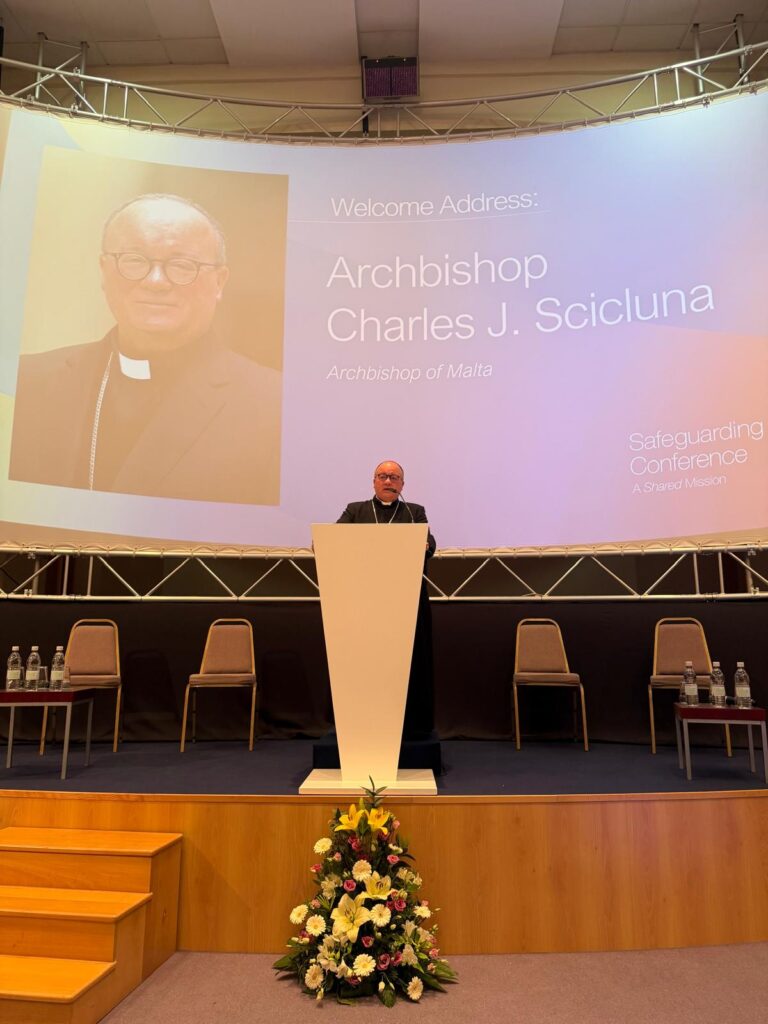
Mons. Ali joined Archbishop of Malta, Mons. Charles J. Scicluna to open the National Safeguarding Conference.
He described the Commission’s Annual Report as “a map, not a completed journey,” noting that the latest edition focuses on “integral reparation” and what he called conversional justice — a model of accountability rooted in truth, mercy and reform. The Memorare Initiative, he added, helps episcopal conferences establish safeguarding systems through formation and peer collaboration, showing that “safeguarding is an act of evangelization, not administration.”
“Protection is the Church’s way of saying, ‘Every person matters. Every life is sacred.’ It’s not only about procedures or rules but about the Gospel made visible in how we treat one another.” – Mons. Alí Herrera
“Collaboration between the Church and civil society is not only strategic; it is a moral imperative,” he said. “The Church must be open and transparent, and civic institutions should recognize the Church’s ability to educate consciences and prevent harm. Both serve the same goal: the dignity and safety of every person.”
Mons. Alí Herrera concluded by invoking the example of St. Josephine Bakhita, who endured slavery before finding freedom in faith, calling her life a model of resilience and reconciliation. “No one should ever be nameless again,” he said. “Protection is the language of love, and love is the truest form of justice.”
He ended by linking Malta’s biblical heritage to its contemporary mission. “May this island, once a place of shipwrecks, continue to be a place of new beginnings — where faith, truth and compassion converge,” he said.

0 Comments