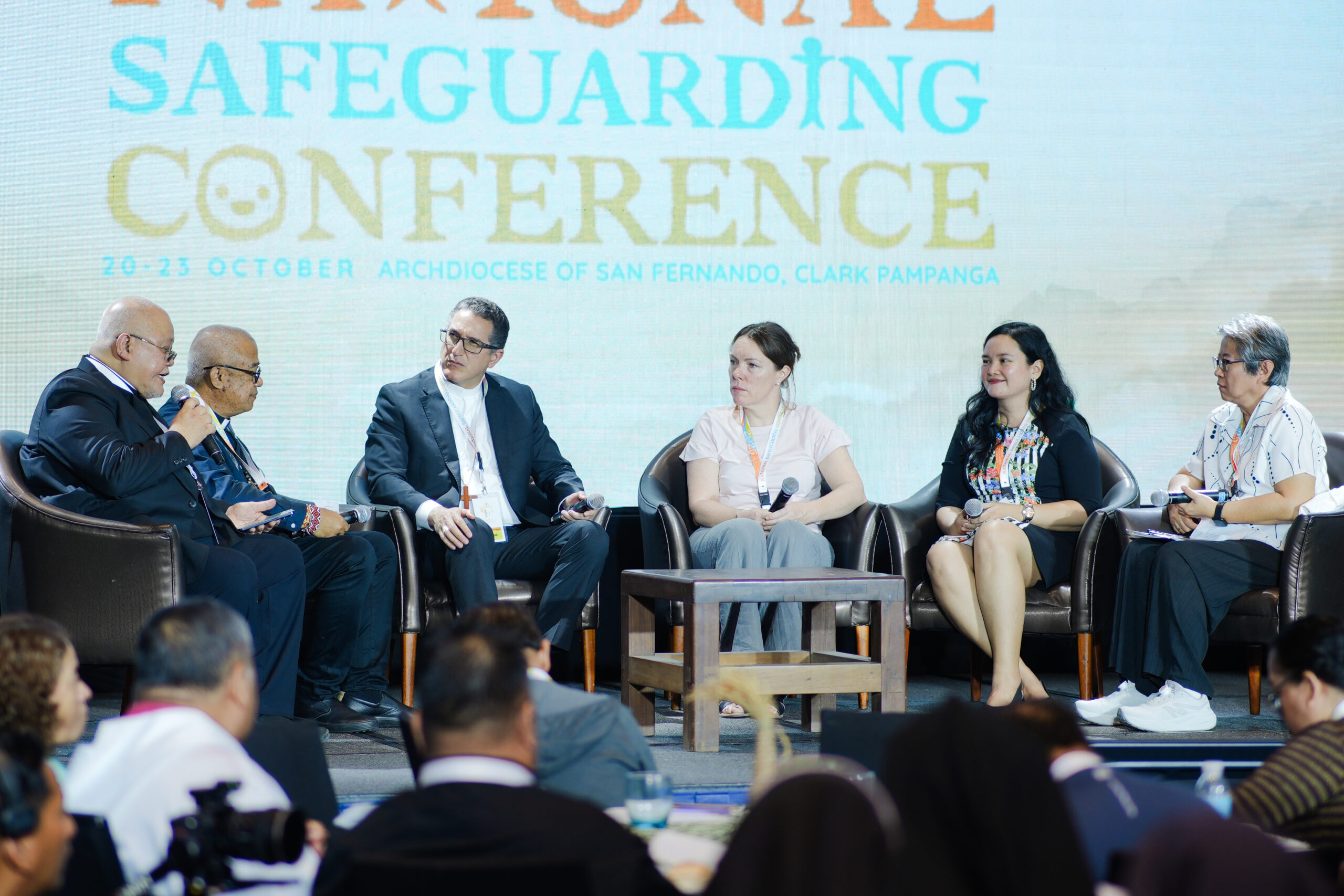
ANGELES CITY, Philippines — With the theme “Our Mission of Safeguarding: A Journey of Hope and Compassion,” the National Safeguarding Conference 2025 convened in Angeles City, Central Luzon bringing together bishops, clergy, religious leaders, lay experts, and international speakers in a unified call to protect the vulnerable and promote a culture of accountability within the Church. Hosted by the Commission, the Catholic Bishops’ Conference of the Philippines, the Catholic Safeguarding Institute, and the Conference of Major Superiors in the Philippines, the four-day event marked a significant moment in the Church’s ongoing efforts to confront abuse and strengthen safeguarding practices across Asia-Oceania.
A Unified Commitment to Safeguarding Across Asia-Oceania
The conference opened with a keynote address by Bishop Luis Manuel Ali Herrera, Secretary of the Commission, who emphasized that safeguarding is not merely an administrative obligation but a theological and pastoral imperative. “This mission does not arise from crisis or fear,” Mons. Ali Herrera said. “It is rooted in faith in Christ Jesus, who is our hope.” Drawing from the Synod on Synodality, Mons. Ali Herrera underscored the Church’s call to walk together in communion, participation, and mission.
“Protection must permeate our ecclesial governance, ministries, and digital spaces.” — Mons. Ali Herrera
Secretary Ali’s address was a powerful reflection on the Church’s failures and the urgent need for conversion. Quoting Pope Francis’ 2018 letter to the People of God, he reminded attendees that “the cry of victims was more powerful than all the measures designed to silence it.”
The conference began on 20 October with an opening Mass at Holy Rosary Parish, presided over by Archbishop Florentino Lavarias and preached by Bishop Joel Baylon. Over the next three days, participants engaged in plenary sessions, keynote addresses, sectoral conversations, and concurrent workshops.
Bishop Ali Herrera: Safeguarding as a Pastoral and Theological Mission
On 21 October, Mons. Ali Herrera’s keynote speech was followed by a plenary conversation and a virtual address by Fr. Hans Zollner SJ, Director of the IADC at the Pontifical Gregorian University, who spoke on the intercultural dimensions of safeguarding. The day concluded with concurrent sessions on topics ranging from canon law and formation to relational safety and victim-centred approaches.
22 October featured a keynote by Archbishop Charles Jude Scicluna, who reflected on Pope Francis’ legacy in child protection. The day’s sessions focused on accountability, accompaniment of victims and perpetrators, civil law, and safeguarding in families and online spaces. The evening closed with a fellowship night and open consultations with Commission members.
Mons. Ali Herrera introduced the concept of conversional justice, developed in collaboration with legal scholar David Smolin. This model reframes justice as a redemptive act rooted in conversion, truth, and institutional reform.
“Repairing the torn fabric of past experience is a redemptive act. Now is the time to repair the damage done to previous generations and to those who continue to suffer.” — Mons. Ali Herrera
He called for decisive leadership from bishops and religious superiors, urging them to integrate safeguarding into pastoral projects and diocesan governance. “Let protection become a living, day-to-day commitment,” he said. “Now is the time to move from intention to implementation.”
From Intention to Implementation: Building a Culture of Protection
Mons. Ali Herrera also outlined concrete measures: establishing independent reporting channels, investing in trauma-informed formation, developing digital safeguarding protocols, and collaborating with survivor groups and civil authorities. He emphasized the importance of aligning with the Holy See’s directives, particularly Vos Estis Lux Mundi, and Pope Leo XIV’s recent call for zero tolerance and a culture of prevention.
The Commission’s secretary concluded with a call to build a future where protection is not a reaction but a vocation. “Let us ensure our parishes, schools, and digital spaces are sanctuaries of safety. Let us listen to victims not as problems to be managed, but as prophets calling us to conversion.”
Throughout the week, the conference embodied its theme: a journey of hope and compassion. From theological reflection to practical training, from prayerful liturgies to candid conversations, the event marked a milestone in the Church’s safeguarding mission.
As Pope Leo XIV wrote in his 2025 letter to the Ugaz Project in Peru:
“Zero tolerance is not a slogan; it is a moral obligation. The credibility of our witness depends on our courage to act, reform, and protect.”
The National Safeguarding Conference 2025 was a testament to that courage and a commitment to walk together toward a Church that protects, heals, and renews.

0 Comments