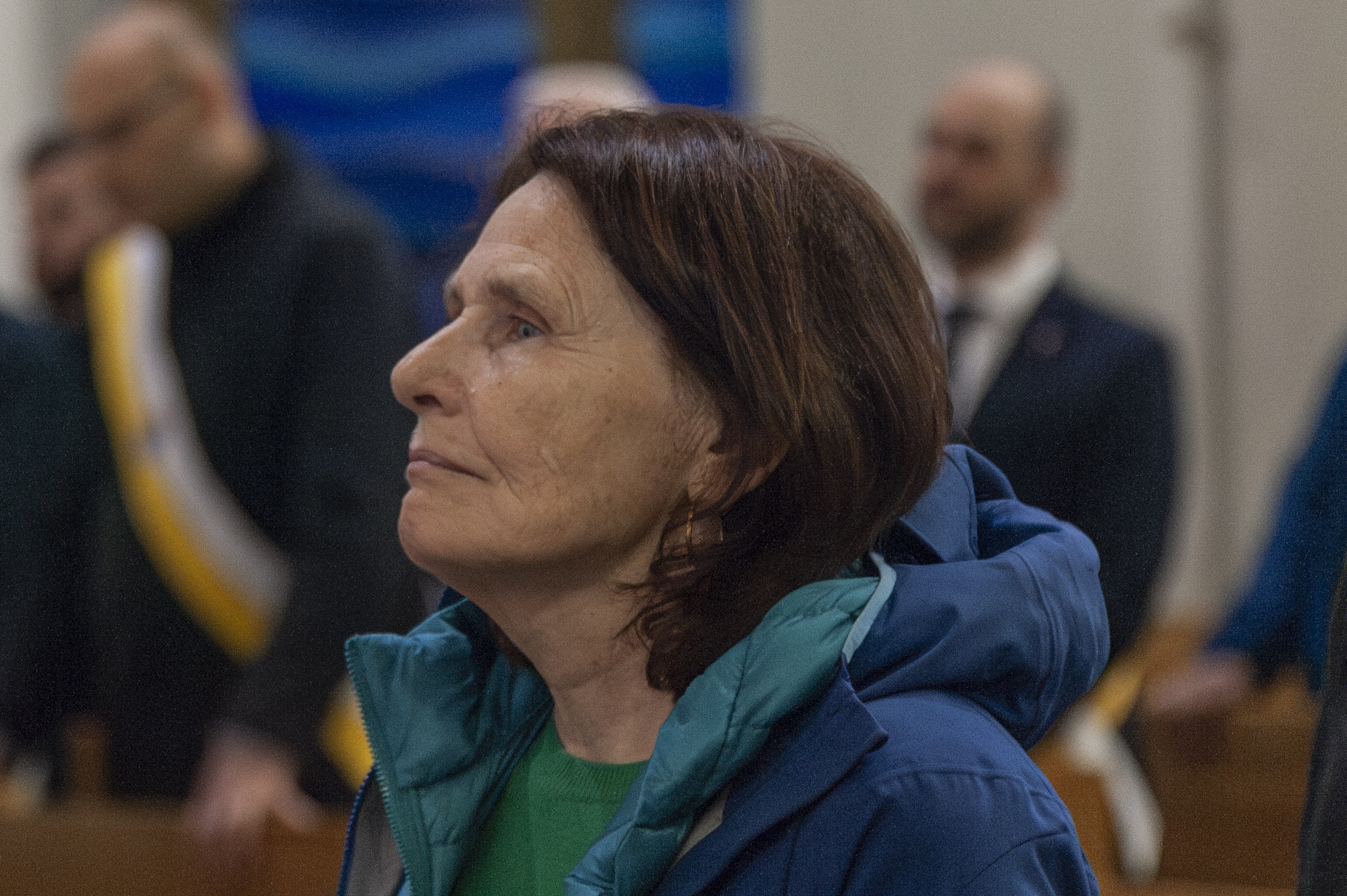
VATICAN CITY — In this month’s episode of Inside Safeguarding, William Roberts sits down with Commission member Teresa Devlin, head of the Universal Guidelines Framework initiative. After more than 15 years working in child safeguarding within the Catholic Church, Devlin is clear about where the real work now lies. Writing policies, she says, is no longer the central challenge. Ensuring that safeguarding becomes a lived, daily reality in every diocese, parish and religious community is.
A social worker by background, Devlin joined the Commission after retiring in May 2024 from her role supporting bishops and religious leaders in Ireland to develop safeguarding structures that place children’s voices and survivors’ needs at the centre. The UGF was conceived as a global initiative designed to support the Church in building consistent, credible safeguarding standards across vastly different cultural contexts. Creating guidelines for a global Church, Devlin explained, quickly exposes the limits of theory. “You cannot do this work from Rome alone,” she said. “If guidelines are not grounded in the lived experience of local communities, they will simply not work.”
That grounding came through extensive consultation with safeguarding practitioners, Church leaders and, most significantly for Devlin, survivors of abuse. Those encounters, she said, remain the most powerful moments of the entire process. Listening to survivors who have been profoundly harmed not only by abuse, but also by inadequate Church responses, continues to leave a lasting mark. What moved her most, she said, was their willingness to engage constructively despite deep disappointment.
“They want the Church to do better, even when it has failed them. That kind of courage and generosity is extraordinary.” – Teresa Devlin
To test whether the framework could function beyond paper, the Commission piloted the draft guidelines in Tonga, Poland, Zimbabwe and Costa Rica. The pilots made clear that safeguarding cannot be implemented through a single template. Cultural norms, leadership structures and local capacity all shape how safeguarding is understood and practiced. In some contexts, extensive training and accompaniment were essential; in others, experienced local experts asked primarily for clear principles they could adapt themselves. “There is no one-size-fits-all approach,” Devlin said. “Safeguarding has to be localised, or it risks being resisted or misunderstood.”
One of the defining features of the UGF is its explicit theological grounding, something Devlin considers essential for lasting change. While civil law provides necessary standards and obligations, she said, it is not enough on its own to motivate transformation within the Church. Scripture and Church teaching speak directly to questions of leadership, responsibility and care, giving safeguarding a moral depth that resonates with clergy and lay leaders alike.
“We are not safeguarding simply because the law tells us to. We safeguard because the Gospel calls us to protect the most vulnerable.” – Teresa Devlin
Devlin did not shy away from acknowledging that denial, resistance and negligence still exist in parts of the Church. While there is much good practice worldwide, she said, confronting failure remains unavoidable. The Commission’s approach, she explained, is deliberately twofold: naming harmful behavior clearly, while also supporting leaders who may never have been trained to understand the full impact of abuse. “Many people entered ministry because of a genuine calling,” she said. “But unless they truly listen to survivors, they may never grasp the lifelong spiritual, physical and psychological harm abuse causes.”
For that reason, Devlin believes survivor involvement must remain central to training and formation. Policies alone cannot change hearts. “When leaders sit with survivors and really listen, something shifts,” she said. “Safeguarding stops being abstract and becomes deeply human.”
Looking ahead, Devlin stressed that implementation will determine whether the UGF succeeds. The Commission plans to build networks of trainers, provide practical tools and introduce audit mechanisms designed to support growth rather than punish failure. Her philosophy is clear: support first, accountability second. Local self-auditing will help communities reflect on what is working and where further help is needed, followed in time by a broader audit framework to ensure consistency and credibility.
The full conversation with Teresa Devlin is featured in this month’s episode of the Inside Safeguarding podcast.
0 Comments