

Reflections from Spain’s VIII National Meeting of Safeguarding Offices
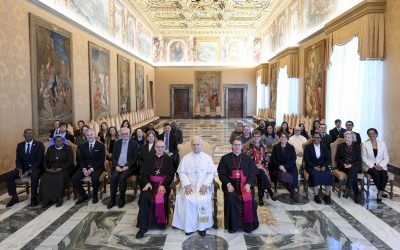
MADRID — The VIII National Meeting of Safeguarding Offices in Spain brought together roughly 200 participants from dioceses, religious congregations and safeguarding offices across the country on 17–18 October 2025.
Held under the theme “Hopeful Reasons in the Face of the Silent Cries of the Abuse of Minors” (Razones esperanzadas ante los gritos silenciosos de los abusos en menores), the encounter became more than a formal meeting. It was a shared moment of reflection, prayer and commitment, focused on how the Church in Spain can strengthen a culture where protection is real and healing is possible.
A defining feature of the gathering was the strong cooperation between the Spanish Bishops’ Conference and the Conference of Religious (CONFER). Representatives of diocesan safeguarding offices and religious congregations shared experiences side by side, demonstrating a unified mission rather than parallel efforts. In recent years, this collaboration has become a tangible sign of the Church’s unity in the service of protection, valuing the diversity of charisms while pursuing the same Gospel goal: to create safe environments for all.
Listening as the First Act of Protection
Speakers repeatedly returned to one essential truth: before any protocol or policy, there must be listening, the kind that welcomes people with patience and respect. Listening, they said, restores dignity. It communicates that every story matters and that the Church must be a place where wounds are heard with reverence.
Participants reflected on the need to offer spaces that are safe, calm and free of judgment, places where victims and survivors can speak when they are ready. Safeguarding begins here, they said: in the courage to listen deeply, without defensiveness or fear.
Healing as Accompaniment
Some of the most moving moments came from those who have accompanied victims and survivors on their journey toward healing. One reflection used the image of the Good Samaritan, who not only stops to help but ensures that the wounded person finds care and continuity in the “inns” along the road.
Healing, participants agreed, requires many such “inns”: spaces of pastoral and psychological support, prayer, professional help and community. As one participant said, “To heal means to give another the freedom to walk again, not to erase the past, but to release its weight.”
Each encounter must be unique, they added, because each story is unique. There are no fixed formulas, only the patient rhythm of trust, presence and accompaniment.
Religious congregations in Spain have played a vital role in this ministry of accompaniment. Many have established safeguarding teams, networks of trained formators and programmes for integral healing. Their testimonies reflected years of humble service, often carried out in silence, offering safe spaces and long-term pastoral care. Together with diocesan offices, they form a growing national network of protection strengthened by collaboration and mutual learning.
Hope as a Shared Mission
In this context, Claudia Giampietro, Regional Expert for Europe with the Commission, encouraged participants to view their work as part of a wider ecclesial effort. She referred to the Commission’s Annual Report, noting that its findings and recommendations are designed to support local Churches in implementing safeguarding with transparency, accountability and participation.
“The Report is not merely a document, it’s a tool of communion: a sign of shared responsibility linking the universal Church with each local initiative.” – Claudia Giampietro
Walking Together in Faith and Responsibility
The atmosphere of the meeting was both realistic and hopeful. Participants acknowledged the fatigue that can come from facing pain day after day but spoke too of the grace that emerges when communities choose perseverance.
Safeguarding, they said, is not merely an obligation but a spiritual path, a way of living the Beatitudes in today’s Church. It calls for humility, perseverance and compassion that does not grow weary.
“Razones Esperanzadas”
The title of the encounter—razones esperanzadas, or “hopeful reasons”, expresses a conviction born from experience: that even amid suffering, hope can take root in truth and responsibility.
In Spain, that hope is visible in practical ways: in the growing unity between bishops and religious superiors, in survivor-centred formation and in the quiet work of those who listen, accompany and build trust. It is the hope of a Church that learns, changes and believes that every act of care, no matter how small, participates in God’s work of healing.
As the meeting drew to a close, a shared understanding seemed to settle among participants: that safeguarding is, above all, an act of faith. A commitment to protect life, restore dignity and keep alive the Gospel promise that every person is worthy of safety, love and hope.

0 Comments