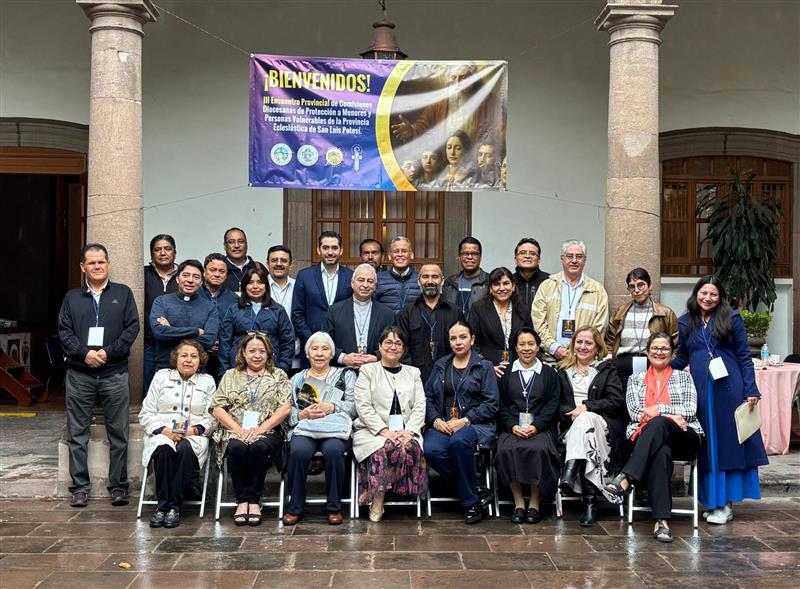
SAN LUIS POTOSÍ, Mexico — On Aug. 25 and 26, the Memorare Initiative of the Province of San Luis Potosí hosted a two-day safeguarding training programme for pastoral leaders, diocesan commissions, health workers, and priests from across the region. The event brought together representatives from the dioceses of San Luis Potosí, Ciudad Valles, Matehuala, and Zacatecas.
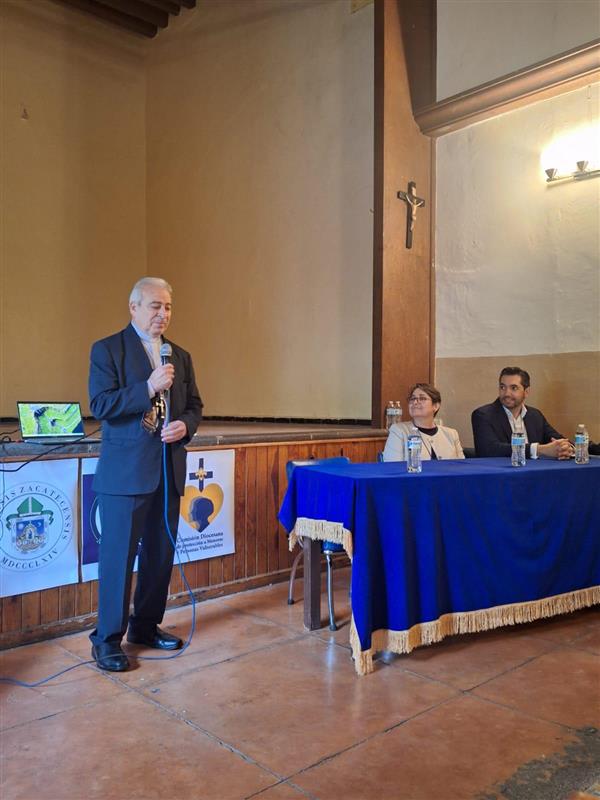
The sessions were designed to strengthen local safeguarding structures and to equip participants with tools for prevention, response, and support in cases of abuse. More than 150 people took part, including 50 pastoral agents and diocesan commission members who will serve as trainers, and 100 priests from the presbytery of San Luis Potosí.
Presentations were given by leading experts in the field. Víctor Fortún Bassauri, a criminal lawyer and member of the National Protection Council of the Mexican Episcopal Conference (CEM), addressed the fundamental components of prevention and response, drawing on institutional responsibility and practical case experience. Claudia Espinosa Almaguer, a criminal lawyer with advanced degrees in criminal policy and procedural law, and a specialist in cases of violence against children and adolescents in San Luis Potosí, spoke about the reality of reporting abuse in the state and explained how criminal proceedings unfold in cases of sexual abuse of children and adolescents.
Dr. Patricia Espinosa, a member of the Commission and of the CEM’s National Council for the Protection of Minors, led sessions on the effects of trauma and abuse on human development, the profile of perpetrators both offline and online, the importance of support for victims and for those accused of sexual abuse, and the role of self-care and ongoing training as protective factors for the priestly ministry.
Organisers said the training was a rewarding experience because it approached child protection from a wide range of perspectives, including civil law, canon law, clinical expertise, and pastoral practice.
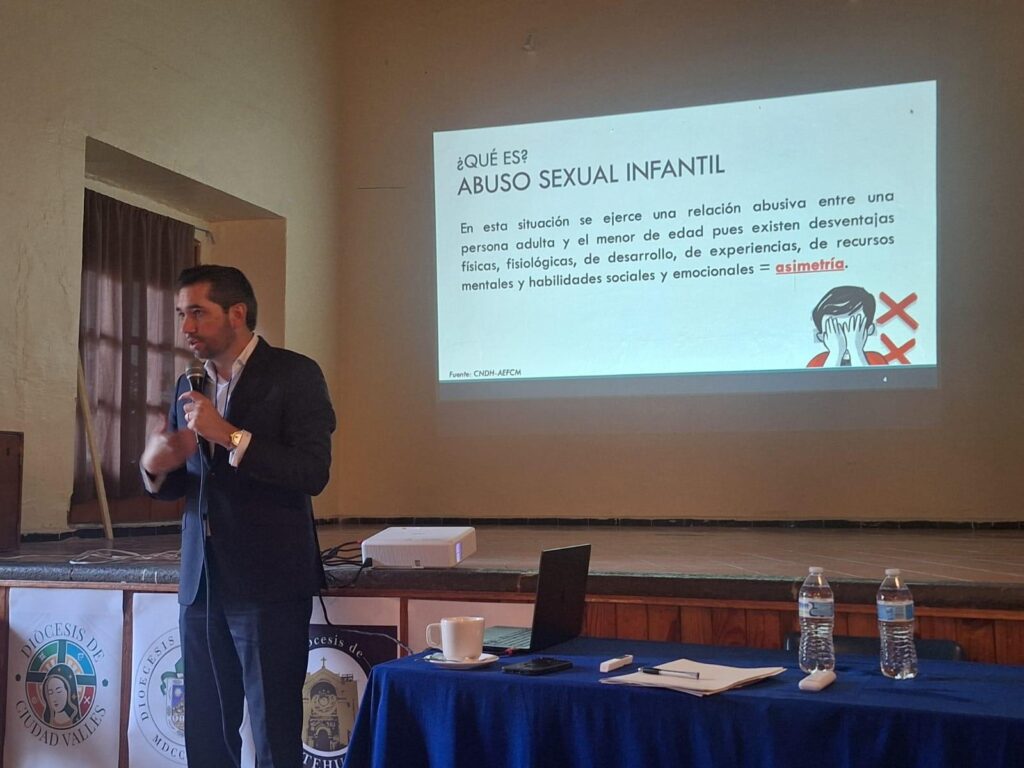
“Preventive training is only effective from a multidisciplinary perspective, which is why a key point is: working collaboratively, creating networks and in synodality. Not doing so implies fragmenting efforts and therefore wasting human and financial resources.” – Dr. Patricia Espinosa
“The intensive training over these two days reinforces the pastoral and civic responsibility of the diocesan commissions and motivates and challenges us to continue our ongoing formation in the protection of our children and adolescents.” said Mons. Jorge Alberto Cavazos, Archbishop of San Luis Potosí, for whom the protection of minors and vulnerable persons is an essential element of the archdiocesan pastoral ministry.

0 Comments