
Tutela Minorum meets with Pope Leo XIV for dialogue on the protection of minors in the Church
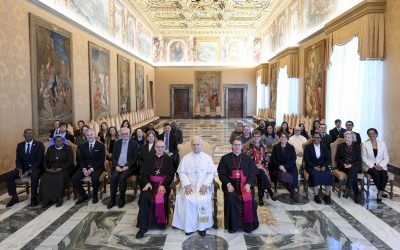
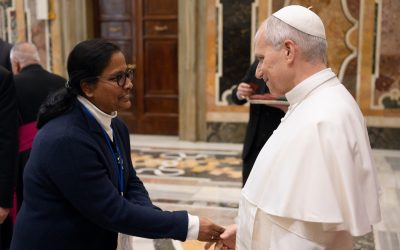
VATICAN CITY – Today, the Pontifical Commission for the Protection of Minors (PCPM) was received in audience by His Holiness Pope Leo XIV. The hour long meeting marked a significant moment of reflection, dialogue, and renewal of the Church’s unwavering commitment to the safeguarding of children and vulnerable people.
It is with humility and hope that we continue the mission first entrusted to us by Pope Francis in Praedicate Evangelium: to advise the Supreme Pontiff in the development and promotion of universal safeguarding standards, and to accompany the Church in building a culture of accountability, justice, and compassion.
The Universal Guidelines Framework: A Living Process
Over the past two years, the Commission has undertaken a wide-reaching process to develop a set of Universal Guidelines Framework for Safeguarding (UGF), in close consultation with Church leaders, safeguarding professionals, survivors of abuse, and pastoral workers from across the globe. This synodal effort has resulted in a draft framework that has been tested and refined through pilot programs in Tonga, Poland, Zimbabwe, and Costa Rica. These regional pilots have provided the Commission with invaluable insights into the practical, cultural, and theological dimensions of safeguarding.
These guidelines are not only descriptive—they are deeply theological, rooted in Scripture, Catholic Social Teaching, and the magisterium of Popes Benedict XVI, Francis, and Leo XIV. They seek to inspire a true conversion of heart in every leader and pastoral agent in the Church, ensuring that safeguarding becomes not merely a requirement, but a reflection of the Gospel’s call to protect the least among us.
The Memorare Initiative: Sustainable Safeguarding Subsidiarity

The Commission also updated Pope Leo on progress in the Memorare Initiative, our capacity-building program designed to support local churches—particularly in the Global South—in their efforts to protect minors and care f or victims of abuse.
The initiative draws its name from the ancient prayer to the Blessed Virgin Mary, reminding us that “no one is left unaided.” It offers a practical and pastoral response to Pope Francis’s call that each particular Church become “the safest place of all.”
With financial support from Episcopal Conferences, the Memorare Initiative works through four pillars:
1. Establishing Safeguarding Infrastructure: Supporting the creation of local offices that offer victim support, ensure reporting mechanisms, and provide access to legal, psychological, and pastoral services.
2. Prevention through Education: Offering training and implementation support for protocols that foster safe environments and a culture of good treatment and respect.
3. Global Collaboration: Building intercontinental networks for knowledge sharing and collective commitment, under the principle of “One Church for the Protection of Minors.”
4. Strategic Communication: Empowering local churches to communicate effectively, promote safeguarding, and foster transparency.
The Memorare Initiative is tailored to each ecclesial context. It respects local autonomy while offering essential support to ensure that all churches, regardless of resources, can uphold their sacred duty to protect the vulnerable.
The Annual Report 2024: Reparations, a pillar of Conversional Justice
The Commission also updated the Holy Father on the development and impact of the Annual Report, a cornerstone of its mandate. First proposed by Pope Francis in 2022, the Report is designed to evaluate the safeguarding capacity of local churches, offering practical recommendations grounded in the lived realities of each region.
This year’s Annual Report features a focused exploration of Conversional Justice through the lens of reparations. This includes a comprehensive pastoral-theological study and the collection of data on current reparations practices across the Universal Church. A new vademecum on reparations, informed by the lived experiences of victims and survivors, is in development to guide local churches in responding with justice and compassion.

The Report incorporates several methodological enhancements, including an expanded Victim/Survivor Focus Group with direct contributions from survivors across all four Commission regions. Country-level Church data is also drawn from the UN Committee on the Rights of the Child’s review process—answering the growing call for greater transparency through external data. The Commission also outlines its ongoing collaboration with UN partners to improve access to reliable prevalence data on abuse, calling on institutions also outside the Church to invest in better data collection frameworks, for more evidence based action.
This year’s Report delivers reviews and observations for 22 countries and 2 religious congregations (Section 1), identifies regional trends and challenges (Section 2), and includes an institutional review of the Dicastery for Evangelization (Section 3). Section 4 presents the Commission’s initial methodology for reviewing lay movements, piloted in collaboration with the Dicastery for Laity, Family and Life, with initial findings from its review of the Focolare Movement. The Report’s Main Findings and Observations, shaped by ongoing dialogue with Church stakeholders reflect the Commission’s deepening role in supporting reform, transparency, and healing across the Church.
A Call to Safeguarding with Compassion
During the audience, the Commission reiterated its commitment to the unity and collegiality of its members. A letter signed by all members following the March 2025 Plenary Assembly underscored the need for continuity in our mandate, governance, and working methods—affirming the Commission’s independence and its role as a trusted advisor to the Holy Father.
We also express our gratitude to the Dicasteries of the Roman Curia for their increasing collaboration, and we invite continued partnership in this vital ministry.
Our hope is to present the finalized Universal Guidelines Framework to the Holy Father later this year. In the meantime, we reaffirm our commitment to listening, walking with victims and survivors, and supporting every Church community in their efforts to safeguard all of God’s people with compassion.
0 Comments