The church in Zimbabwe has begun testing the Universal Guidelines Framework (UGF), the priority tool of the Pontifical Commission for the Protection of Minors in implementing its mandate to assist local churches in their ministry to safeguard children, adolescents and vulnerable from the risk of abuse.
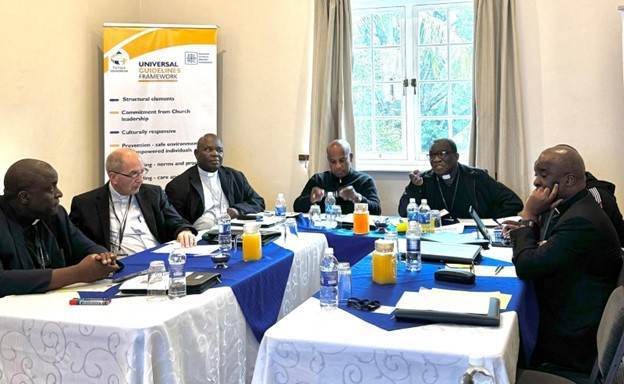
Embracing the Commission’s request to lead a Pilot Project on the UGF the Zimbabwe Catholic Bishops Conference (ZCBC) led a leadership formation session to gather feedback from bishops on the strengths and weakness of the UGF applied in their diocese.
Sister Dr. Annah Theresa Nyadombo HLMC, member of the Pontifical for the Commission for the Protection of Minors, and the African Regional Team, Augusta Muthigani and Patience Mwangi, regional staff experts of the Commission, led the formation in collaborative efforts with seven bishops from the eight Dioceses of Zimbabwe.
The goal of the workshop was twofold: providing formation to the bishops and receiving their valuable insights on the suitability of these set of guidelines in their territory. In this process of feedback, the conversations were around the implementation in the culture of which the local church moves, exploring together the better way to be effective.
A Shared Commitment to Safeguarding

The objectives of the workshop contributed to the universal collective endeavor which works as a testament to the shared commitment to Safeguarding of minors and vulnerable adults.
In his welcoming remarks, Bishop Paul Horan, president of ZCBC, emphasised the importance of the UGF as a guide for developing Safeguarding policies which ensures that structures and systems are in place to protect children and vulnerable adults from abuse.
“Safeguarding at the local church will greatly benefit human sexuality and the holistic human development” Bishop Horan stressed. “The care for the children will help the Church and society create happy memories for children in later years.”
Culture shapes Safeguarding
The participating bishops covered risks, structures, methodology in Safeguarding, formation and the change that is needed in regards to attitudes and behaviors.
They also discussed how the cultural nuances in society and local church in Zimbabwe may pose as a helpful aspect but also a barrier to the development Safeguarding protocols.
There was agreement in the fact that silence and secrecy around sexual abuse is a challenge also in Africa. Although there are serious struggles in Africa to raise awareness in Safeguarding, the strong sense of community emerges as a remarkable strength to foster the culture of Safeguarding.
Africa has a strong family culture, the fundamental value of sacredness of life and hold traditional values and beliefs such as love, respect and care. These different aspects which belong to the context in which the local church exists facilitate the development of Safeguarding principles and understanding of its importance. They contribute in playing a significant role in fostering a culture that respects human dignity.

0 Comments