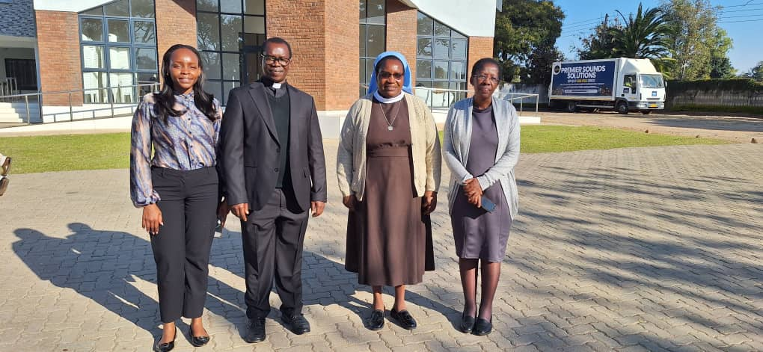
HARARE, Zimbabwe – Catholic leaders in Zimbabwe have made concrete strides to strengthen child protection efforts, following a three-day training hosted by the Commission and the Zimbabwe Catholic Bishops Conference (ZCBC) from June 24 to 26.

Held in Harare, the workshop marked the second phase of a pilot programme testing the Universal Guidelines Framework (UGF), the Commission’s tool for establishing safeguarding standards across the global Church. Delegates included diocesan safeguarding teams, clergy, religious, and lay leaders from across the country.
“The UGF is more than a policy document, it’s a mirror held up to the Church’s conscience,” said Sr. Dr. Annah Theresa Nyadombo, HLMC, ZCBC Safeguarding Coordinator and member of the Commission. “This training is about contextualising safeguarding so that it speaks the language of each community, while still holding to universal principles.”
Through case-based group work, participants tackled real-world safeguarding challenges, including youth protection at Church events, cultural taboos surrounding abuse, and the misuse of spiritual authority. Delegates identified key risks such as inadequate oversight, cultural silence, and lack of policy awareness. At the same time, they highlighted strengths already present in Zimbabwe’s Church structures, such as Small Christian Communities and child protection networks.
Fr. Bernard Mukwewa led a session on Canon Law and Vos Estis Lux Mundi, Pope Francis’ legislation on episcopal accountability. “Safeguarding must be more than words on paper,” he said. “It must be practiced, monitored, and continuously improved.”
A keynote address by Teresa Kettelkamp, Adjunct Secretary of the Commission, underscored the global significance of the workshop. She praised Zimbabwe’s progress, especially in Catholic schools and parishes, and called on participants to view safeguarding as both institutional and deeply personal.
“Safeguarding is an essential responsibility that belongs to everyone. A more fitting term to describe safeguarding, prevention, and protection is ‘caring.’ Our Catholic faith encourages us to care for, respect, and uphold the dignity of every individual.” – Teresa Kettelkamp


She also outlined the Commission’s threefold mandate: assisting local churches with safeguarding guidelines, supporting the implementation of mandatory reporting standards, and producing an annual report for the Holy Father.
“The Universal Guidelines Framework is dedicated to the Catholic Church’s mission to create a safe environment for all, reflecting the Church’s belief in the inherent dignity of every person” – Teresa Kettelkamp

Participants provided feedback to improve the UGF, including calls for greater inclusion of the laity, mental health support, and clear safeguarding protocols for seminaries and Church-run institutions. Delegates stressed the importance of translating policies into local languages and of investing in trained safeguarding officers.
The final day of the workshop featured action plans from each diocese. The Archdiocese of Bulawayo committed to translating policies and raising awareness during upcoming pilgrimages; the Diocese of Mutare pledged to draft whistleblowing policies and promote stakeholder engagement; and the Diocese of Chinhoyi announced the launch of a 24-hour safeguarding hotline and mobile outreach unit.
Augusta Muthigani, Africa Regional Expert for the Commission, praised the momentum on display. “Zimbabwe is showing that safeguarding is possible if we lead with courage, listen with humility, and act with faith,” she said.
Kettelkamp closed with a message of hope and responsibility.
“Christian values, deeply rooted in the essence of every culture, provide a strong foundation for protecting minors and vulnerable adults. This is our shared mission—and our witness to the Gospel.” – Teresa Kettelkamp
0 Comments