
The Pontifical Commission for the Protection of Minors joined the Government, UNICEF and partners in Bulawayo to strengthen child protection systems, boost investment for children and advance safeguarding collaboration across sectors.
Bulawayo, Zimbabwe — Zimbabwe reinforced its commitment to protecting children with the successful hosting of the Zimbabwe National Child Protection Conference from July 7–10 at the Zimbabwe International Trade Fair Grounds in Bulawayo. The conference brought together senior government officials, development partners, faith-based organizations, academics, child protection practitioners and civil society representatives to strengthen collaboration and advance child protection across the country.
Convened by the Government of Zimbabwe in partnership with UNICEF Zimbabwe and supported by Sweden, the conference served as a key platform for discussing policy implementation, financing child protection programs, improving coordination among stakeholders and addressing emerging threats facing children. The gathering highlighted a growing national consensus that effective child protection requires strong partnerships, sustainable investment and evidence-based approaches.
A major outcome of the conference was the official launch of the National Action Plan for Children IV (2026–2030), Zimbabwe’s latest strategic framework aimed at improving the wellbeing and protection of children nationwide. Delegates also witnessed the launch of the Zimbabwe National Child Online Protection Policy, reflecting the country’s recognition of the increasing risks children face in digital spaces.
Speakers throughout the conference emphasized that child protection challenges have evolved significantly in recent years. While violence, abuse, neglect and exploitation remain persistent concerns, children are also increasingly exposed to online threats, including cyberbullying, exploitation and harmful digital content. Participants agreed that policy and practice must adapt to address both traditional and emerging risks.
The conference focused extensively on strengthening Zimbabwe’s Child Protection System through better coordination among government ministries, local authorities, development agencies, communities and child-focused organizations. Discussions highlighted the importance of effective referral pathways, data-driven programming and responsive services that place the needs and rights of children at the center of interventions.
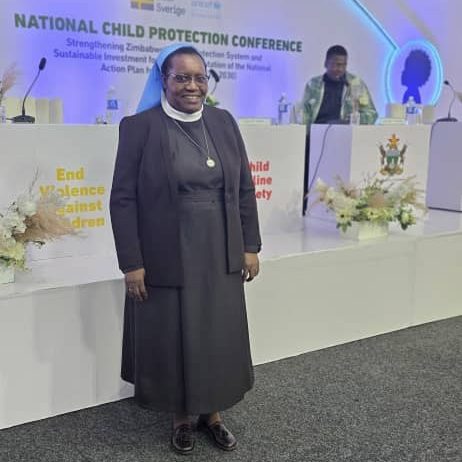
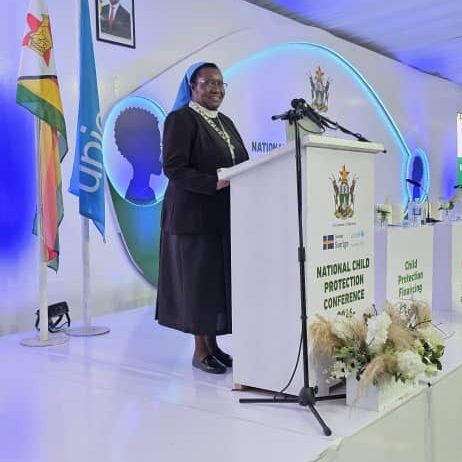
An important feature of the conference was the participation of Sr. Theresa Annah Nyadombo, African Regional Moderator of the Pontifical Commission for the Protection of Minors. Her presence underscored the Commission’s ongoing commitment to working collaboratively with governments, faith communities and international partners to promote safeguarding and child protection across Africa.
Through its engagement, the Pontifical Commission reaffirmed its support for key safeguarding principles, including prevention of abuse, leadership accountability, survivor-centered approaches, capacity building and multi-sectoral cooperation. The participation also highlighted the important role that faith-based organizations can play in supporting national child protection systems and creating safe environments for children.
Throughout the four-day conference, participants shared experiences, reviewed progress and explored strategies for overcoming persistent challenges. Sessions emphasized the need for increased investment in child protection services, strengthened community-based mechanisms and greater inclusion of children’s voices in decisions that affect their wellbeing.
Delegates noted that sustainable child protection systems depend not only on strong policies but also on effective implementation. The conference therefore provided an opportunity to identify gaps, harmonize approaches and strengthen accountability mechanisms to ensure commitments are translated into measurable outcomes for children and families.
The conference concluded with a renewed call for collective action and shared responsibility in protecting children. Participants emphasized that meaningful progress requires sustained political leadership, adequate resources and continued collaboration among government institutions, development partners, faith communities, civil society and local communities.
As Zimbabwe begins implementation of the National Action Plan for Children IV and the National Child Online Protection Policy, stakeholders expressed optimism that the momentum generated during the conference will contribute to stronger systems, safer environments and better outcomes for children throughout the country.
The Bulawayo gathering demonstrated that protecting children remains a national priority and that coordinated action across sectors is essential to ensuring every child grows up in a safe, supportive and protective environment.
By Fortune Chakasara, FMS
Regional Safeguarding Expert for Africa, Pontifical Commission for the Protection of Minors

0 Comments