
Recent ecumenical initiatives have highlighted the growing commitment of Christian Churches to work together in strengthening safeguarding practices, sharing expertise, and developing common standards to protect children, young people, and vulnerable adults.
From 19–21 June 2026, the Community of Protestant Churches in Europe (CPCE/GEKE) convened its launch conference, “Against Sexual Violence in Churches,” in Warsaw. Bringing together more than seventy participants from around forty churches across over twenty countries, the gathering marked the beginning of a structured process mandated by the CPCE General Assembly in 2024. The initiative seeks to facilitate the exchange and evaluation of safeguarding experiences among Protestant churches throughout Europe while promoting effective practices and accountability.
In a statement adopted by the CPCE Council in Doorn on 30 May and published during the Warsaw conference, the protection of children, young people, and vulnerable adults was identified as an integral part of the Church’s mission and witness. The statement also referenced Resolution 2533 of the Parliamentary Assembly of the Council of Europe, which calls for common standards in addressing abuse and improving protection for vulnerable persons across Europe.
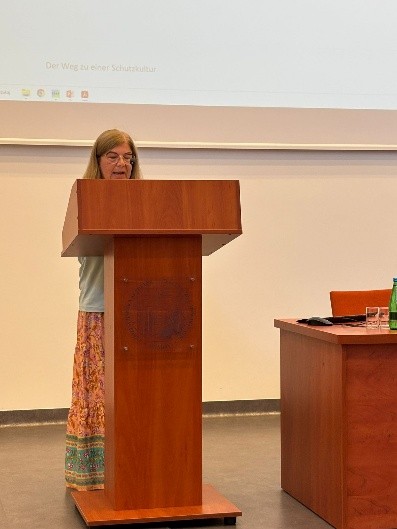
Recognising that safeguarding challenges transcend denominational boundaries, the conference included a dedicated Catholic contribution through a panel featuring Commission Member Ewa Kusz. The discussion deliberately widened the conversation beyond a solely Protestant perspective and focused on issues of institutional culture, power asymmetries, and accountability. Participants emphasised that safeguarding cannot be achieved through policies and documentation alone; meaningful change requires clear procedures, defined responsibilities, and a sustained commitment to cultural transformation.
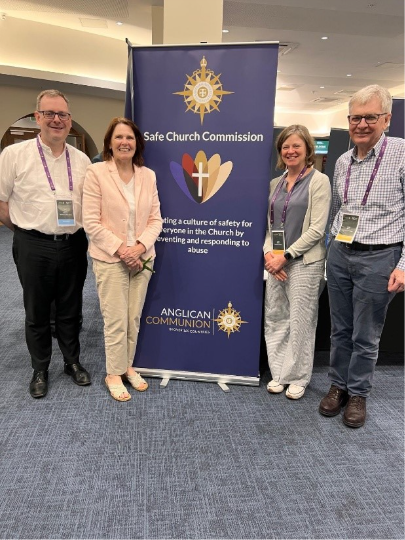
This commitment to ecumenical learning and cooperation is also reflected in the ongoing collaboration between the Pontifical Commission for the Protection of Minors, the Anglican Safe Church Commission, and the Dicastery for the Promotion of Christian Unity. For the past two years, representatives of these bodies have met regularly online to exchange good practice, discuss emerging challenges, and share information on strategic safeguarding initiatives.
The General Assembly of the Anglican Church, held in Belfast, Northern Ireland, on 30 June 2026, provided the opportunity for the first in-person gathering of representatives from these organisations. The meeting reinforced a shared commitment to learning from one another and strengthening safeguarding across ecclesial contexts.
The collaboration is particularly significant because the Anglican Safe Church Commission and the Pontifical Commission for the Protection of Minors are the only internationally based faith-led commissions dedicated specifically to safeguarding within their respective traditions. Their partnership reflects a growing recognition that effective safeguarding benefits from common standards, mutual accountability, and the exchange of expertise across denominational boundaries.
Together, the Warsaw conference and the Catholic–Anglican dialogue demonstrate that safeguarding is increasingly becoming a significant area of ecumenical engagement. While theological differences remain, churches are discovering common ground in their shared responsibility to create safe environments, address abuse effectively, and foster cultures of transparency, accountability, and care. These initiatives suggest that safeguarding is not only a matter of policy and practice but also an important dimension of Christian witness and collaboration in the contemporary world.
Together, the Warsaw conference and the Catholic–Anglican dialogue demonstrate that safeguarding is increasingly becoming a significant area of ecumenical engagement. While theological differences remain, churches are discovering common ground in their shared responsibility to create safe environments, address abuse effectively, and foster cultures of transparency, accountability, and care. These initiatives suggest that safeguarding is not only a matter of policy and practice but also an important dimension of Christian witness and collaboration in the contemporary world.


0 Comments