
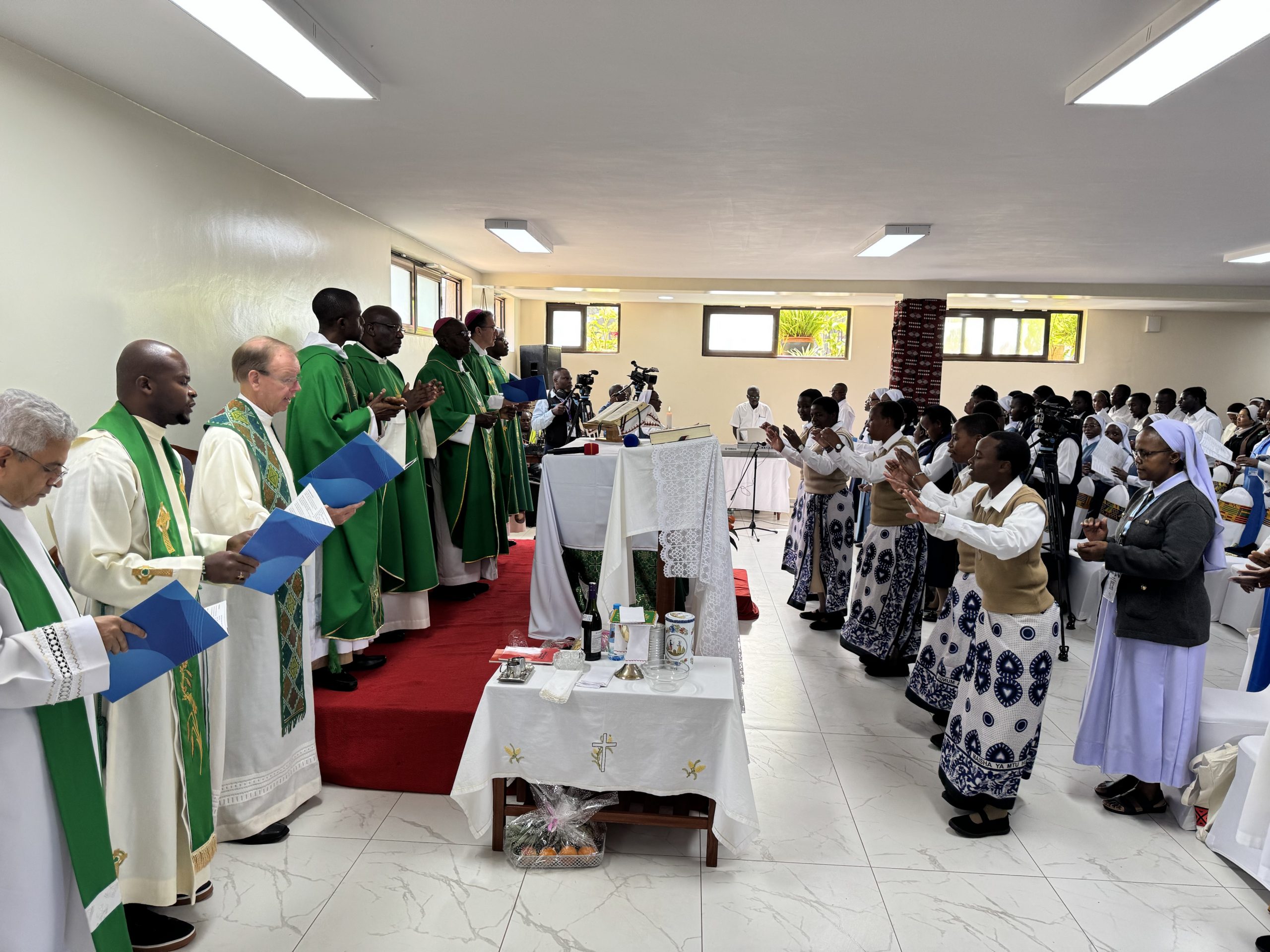
NAIROBI — The Pontifical Commission for the Protection of Minors contributed to a continental gathering of Catholic religious working in canon and civil law in Nairobi, highlighting the relationship between safeguarding, governance and the protection of human dignity across Church institutions.
The conference, organised by Catholic Sisters in the Legal Profession, or CASILEP, brought together legal professionals and Church representatives from across Africa under the theme, “Prophetic Witness of Catholic Sisters in Canon and Civil Matters: Learning, Connecting and Building a Community of Practice for the Common Good.” Published accounts of the gathering described it as the first conference of its kind organised by CASILEP in Kenya.
The gathering opened on 30 July with a Eucharistic celebration, followed by welcoming remarks from Sister Eutropia Chao Mwakamba, director of CASILEP, and a keynote address from the Conrad N. Hilton Foundation.
The Commission was represented by its Secretary, Mons. Alí Herrera, together with Patience Mwangi, Brother Fortune Chakasara, Francesco Pappalardo and Claudia Giampietro.
Their participation formed part of a wider visit to Kenya that included meetings at Tangaza University, the Secretariat of the Association of Member Episcopal Conferences in Eastern Africa, CASILEP, the Association of Sisterhoods of Kenya and the Kenya Conference of Catholic Bishops.
Safeguarding as a question of governance
The Commission led the conference’s first session, focusing on the role of the Church and consecrated persons in upholding human dignity through effective safeguarding measures.
Francesco Pappalardo told participants that safeguarding has not given the Church a new mission, but has changed how responsibility for carrying out that mission must be understood. Rather than being treated as a separate ministry, safeguarding should shape the exercise of ministry itself and the way authority is understood and exercised.
That approach places governance at the centre of safeguarding. Decisions about who receives an allegation, who accompanies a person reporting abuse and who ensures that agreed measures are implemented are not merely procedural questions. They indicate whether safeguarding has become embedded within the life and identity of an institution.
Pappalardo stressed that effective policies depend not simply on their length or level of detail, but on whether responsibility is clearly assigned and accountability forms part of ordinary leadership.
The need for continuity is particularly important when leadership changes. Safeguarding structures must therefore be capable of enduring beyond individual officeholders and must include mechanisms for evaluating whether policies are being implemented effectively.
This emphasis on evaluation also underpins the Commission’s Annual Report and its work on the Universal Safeguarding Framework.
Proper law and institutional responsibility
Claudia Giampietro addressed the responsibilities of institutes of consecrated life, identifying key areas that should be reflected in their proper law.
Protection, she said, must extend to members of an institute themselves, as well as to people served through its ministries and institutions.
Reporting mechanisms must also be genuinely accessible, allowing people to understand where they can report concerns and what will happen after a report is made.
Giampietro also addressed subsidiarity in institutes operating across multiple countries and legal systems. Delegating responsibility, she said, must be accompanied by mechanisms that allow leadership to verify that responsibilities have actually been fulfilled.
She also emphasised the importance of clarifying in advance how safeguarding responsibilities are shared between religious institutes and dioceses, rather than attempting to resolve questions of competence only after an allegation has been received.
From compliance to a culture of protection
A panel moderated by Sister Mumbi Kigutha brought together Sister Mary Lembo, Sister Edith Koech and Father Thomas Mushi, with Mons. Alí Herrera responding on behalf of the Commission.
The discussion examined the transition from procedural compliance towards a broader culture of protection, including the importance of approaches that seek both to prevent abuse and accompany those who have experienced it.
Mons. Alí Herrera also addressed trauma-informed care and the responsibilities of those accompanying survivors, drawing on both his role as Secretary of the Commission and his professional background in psychology.
A further panel, also moderated by Sister Mumbi, included Johanna Streit, head of the Safeguarding Unit at Missio Aachen; Father Calisto Nyagilo of the Safeguarding of Minors Desk of the Archdiocese of Nairobi; and Brother Fortune Chakasara.
Brother Fortune, the Commission’s regional expert for Africa, addressed the relationship between universal safeguarding principles and the different social, ecclesial and legal contexts in which they must be implemented across the continent.
The programme continued with a presentation by Sister Mary Lembo on contemporary safeguarding challenges and an online intervention from Sister Kelly Connors on the separation of members from institutes of consecrated life, including the canonical requirements governing departure and dismissal.
Law, governance and the common good
Sessions on 31 July broadened the discussion to other legal and governance questions affecting religious institutes.
A presentation from the Dicastery for Evangelization was followed by discussions on the administration of temporal goods in canon law and the legal registration of dioceses and religious institutes under Kenyan civil law.
Participants also examined data protection and the use of social media, before taking part in rotating “World Café” discussions on the vow of poverty in the African context, canonical rights and obligations, and the corporate governance of religious institutes under civil law.
The conference reflected CASILEP’s wider aim of strengthening collaboration and professional networks among Catholic religious working in law across Africa. Organisers have said such networks can help religious institutes gain access to legal expertise across different national and ecclesial jurisdictions while strengthening governance, accountability and the protection of vulnerable people.
The gathering concluded with a Eucharistic celebration on the morning of 1 August.


0 Comments