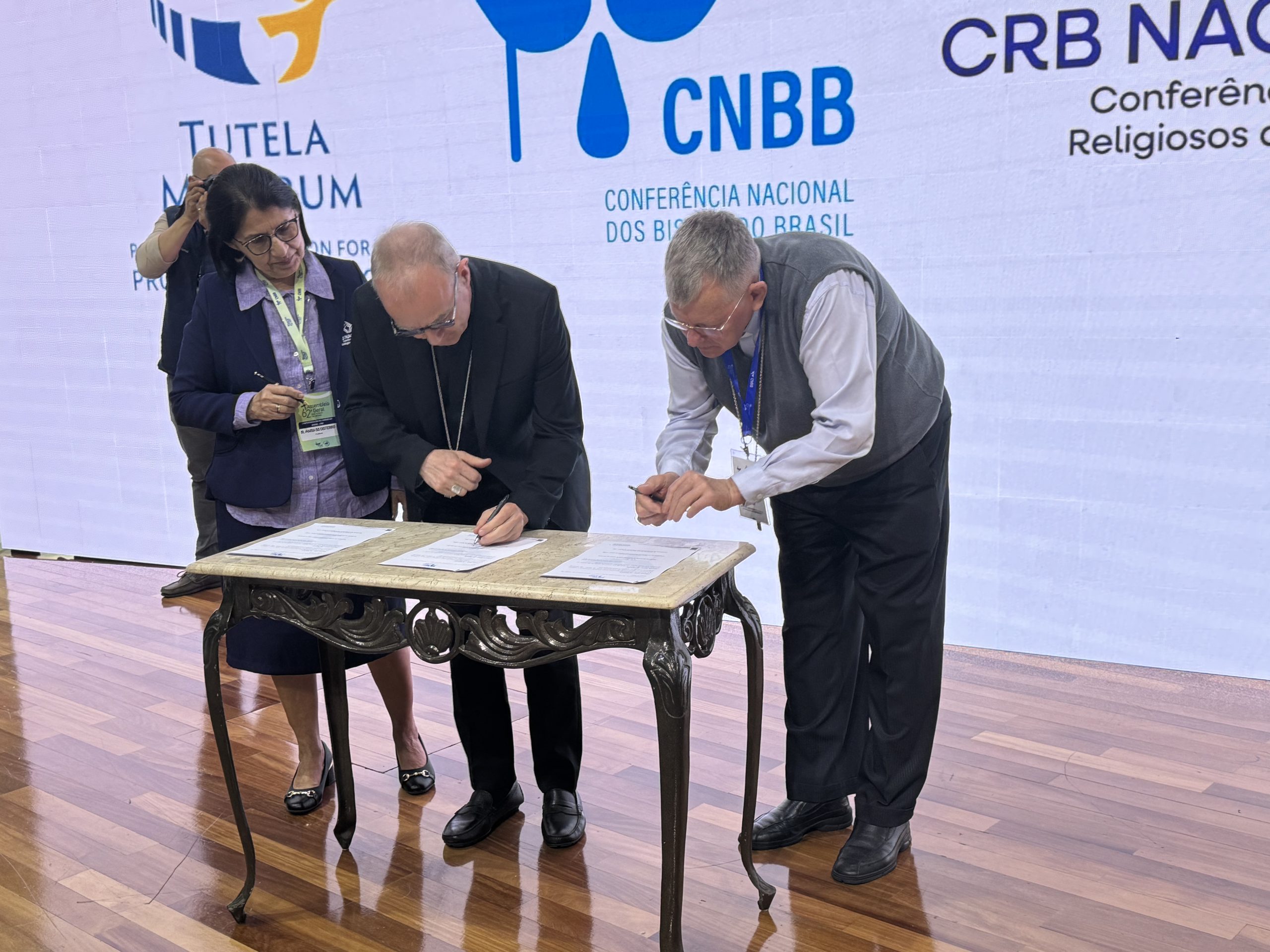
APARECIDA, BRAZIL – In a groundbreaking step on the sidelines of the 62nd General Assembly of the National Conference of Bishops of Brazil (CNBB) the Commission has signed a Memorandum of Understanding with both the CNBB and the Conference of Religious of Brazil (CRB).
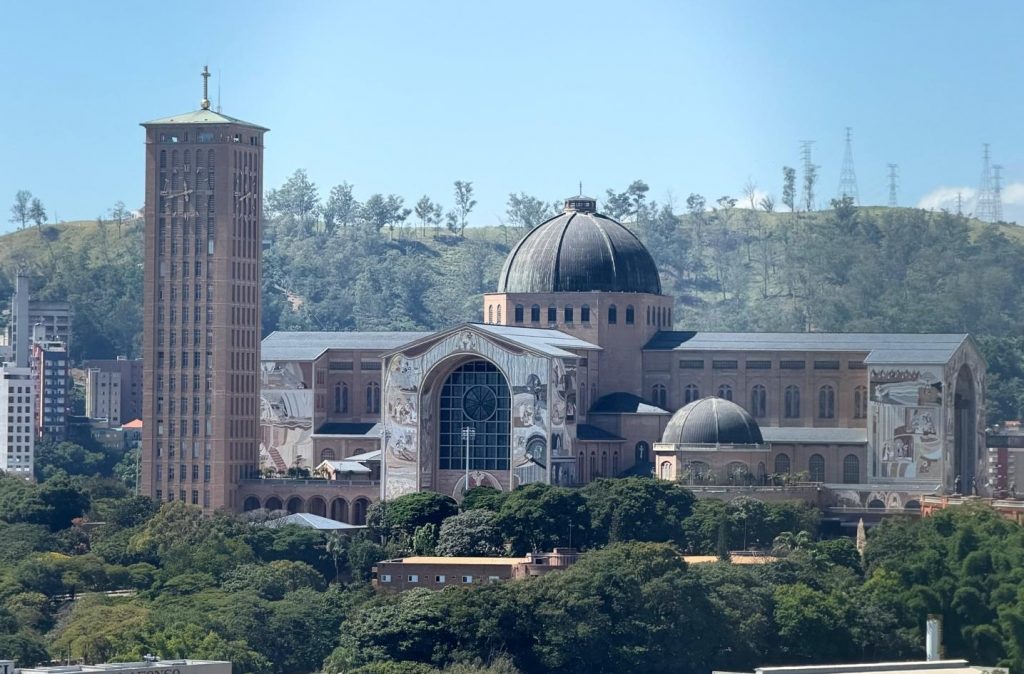
A delegation composed of Commission president Archbishop Thibault Verny, Commission Secretary Mons. Alí Herrera and canonist Claudia Giampietro is participating in the gathering, which runs from 15 to 24 April at the National Shrine of Our Lady of Aparecida, one of the most significant religious sites in Latin America.
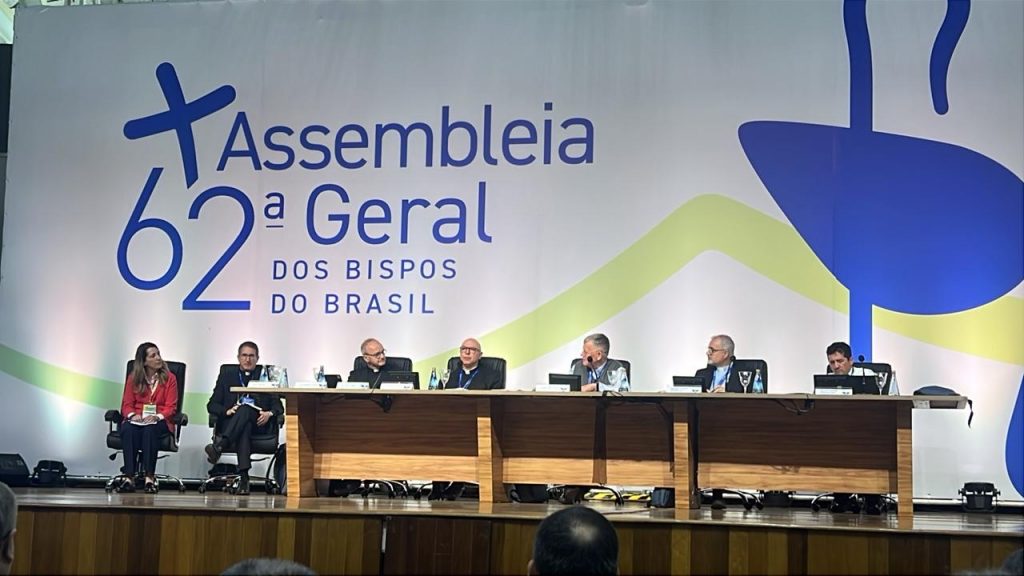
The Assembly, attended by approximately 390 bishops, is expected to address key pastoral priorities for the Church in Brazil, including a vote on new General Guidelines for Evangelising Action. Safeguarding has emerged as a critical focus amid ongoing efforts to strengthen structures for the protection of minors across the country.
Addressing the Assembly, Archbishop Verny framed the Commission’s presence in terms of “humility and fraternity”, emphasising that safeguarding is inseparable from the Church’s mission, noting that “it is precisely when the Church carries out the work of truth, accompanying victims, when it cares for the most fragile, that it announces the Good News.”
“We want to walk with you, shoulder to shoulder, to listen and to engage in a fraternal dialogue.” – Archbishop Thibault Verny
Recalling the experience of his predecessor, Cardinal Seán O’Malley, who on his arrival in Boston in 2003 had to sell the archbishopric and 65 of the diocese’s 357 parishes, Archbishop Verny observed that today the three seminaries of Boston are full, and that the recent rise in catechumens in France also owes much to the Church’s work of truth and prevention. He then entrusted a particular responsibility to the Brazilian episcopate: “I believe the Church in Brazil has a prophetic role for the continent.”
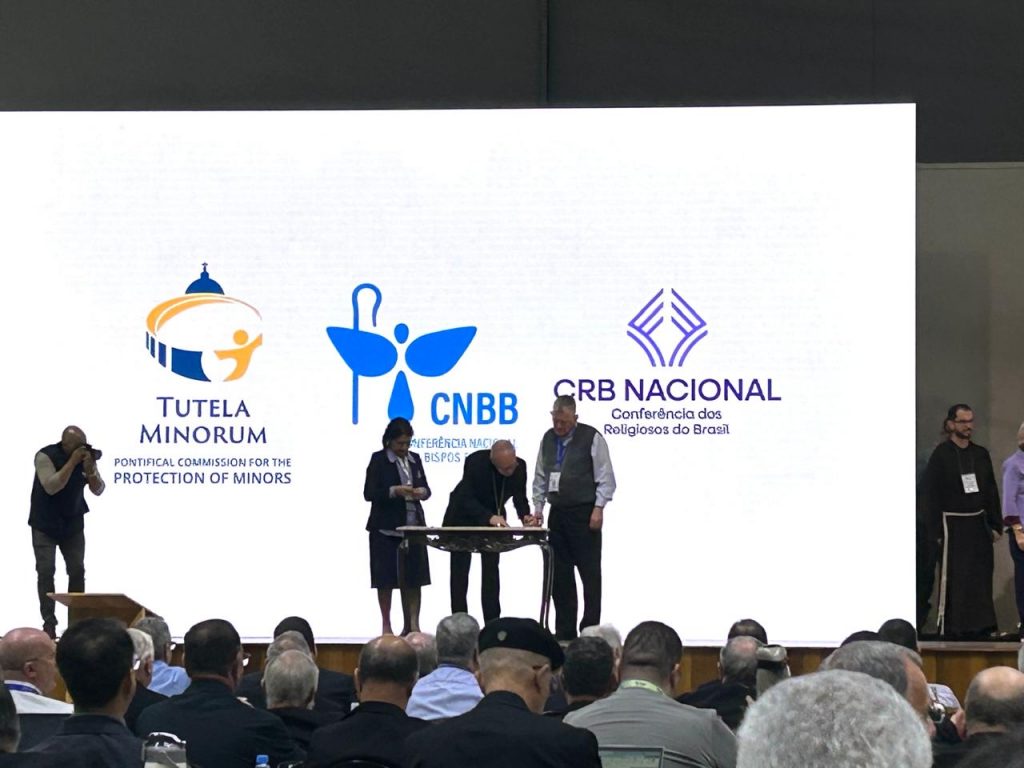
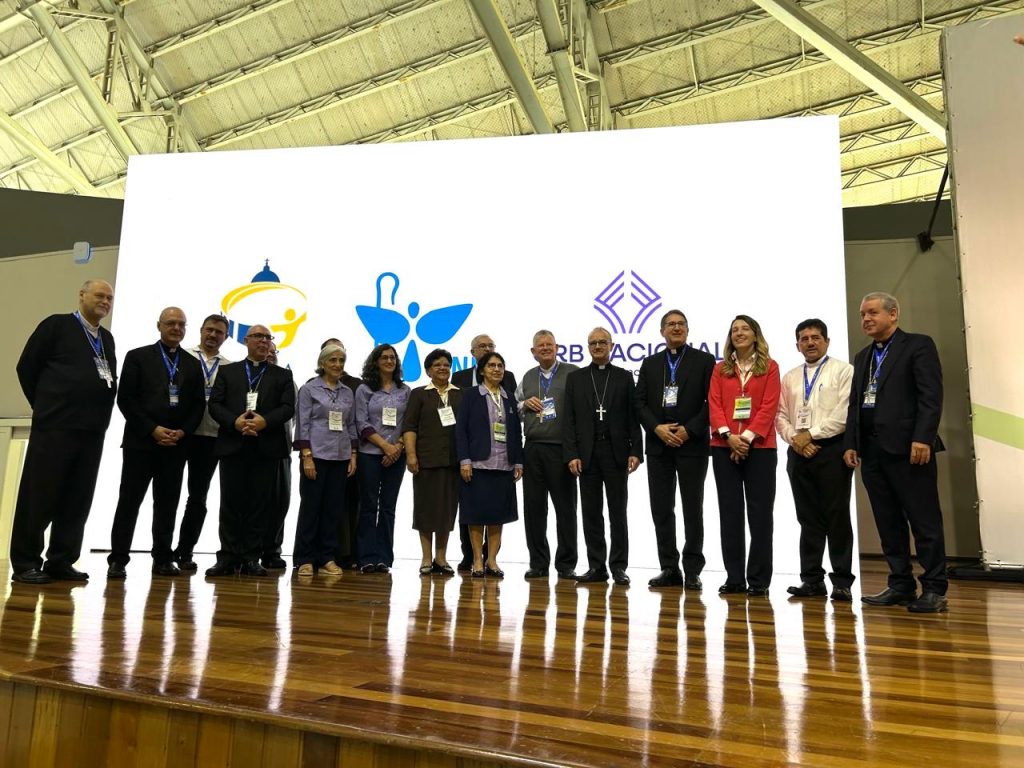
The signing of a Memorandum of Understanding between the CNBB, the Conference of Religious of Brazil (CRB) and Tutela Minorum is aimed at promoting a culture of prevention and care. The Commission’s co-signature, alongside that of the two Brazilian bodies, reflects its role as an operational collaborator in the shared path now opening and in all the initiatives that will follow from it.
The Brazilian Church’s safeguarding efforts are taking place within a broader social context marked by challenges such as human trafficking, the sexual exploitation of minors and regional disparities in pastoral resources. In some areas, particularly in the Amazon, dioceses face structural limitations with minimal clergy and limited institutional capacity.
The Assembly unfolds against a complex international backdrop, including a message of peace from Pope Leo XIV addressed to the Brazilian bishops and to a wider public attentive to Church leadership in a time of global tensions.
As meetings continue in Aparecida, the Commission’s engagement reflects an ongoing effort to walk with local Churches, in Archbishop Verny’s words “shoulder to shoulder”, as they build safeguarding practices grounded in both pastoral care and institutional responsibility.

0 Comments