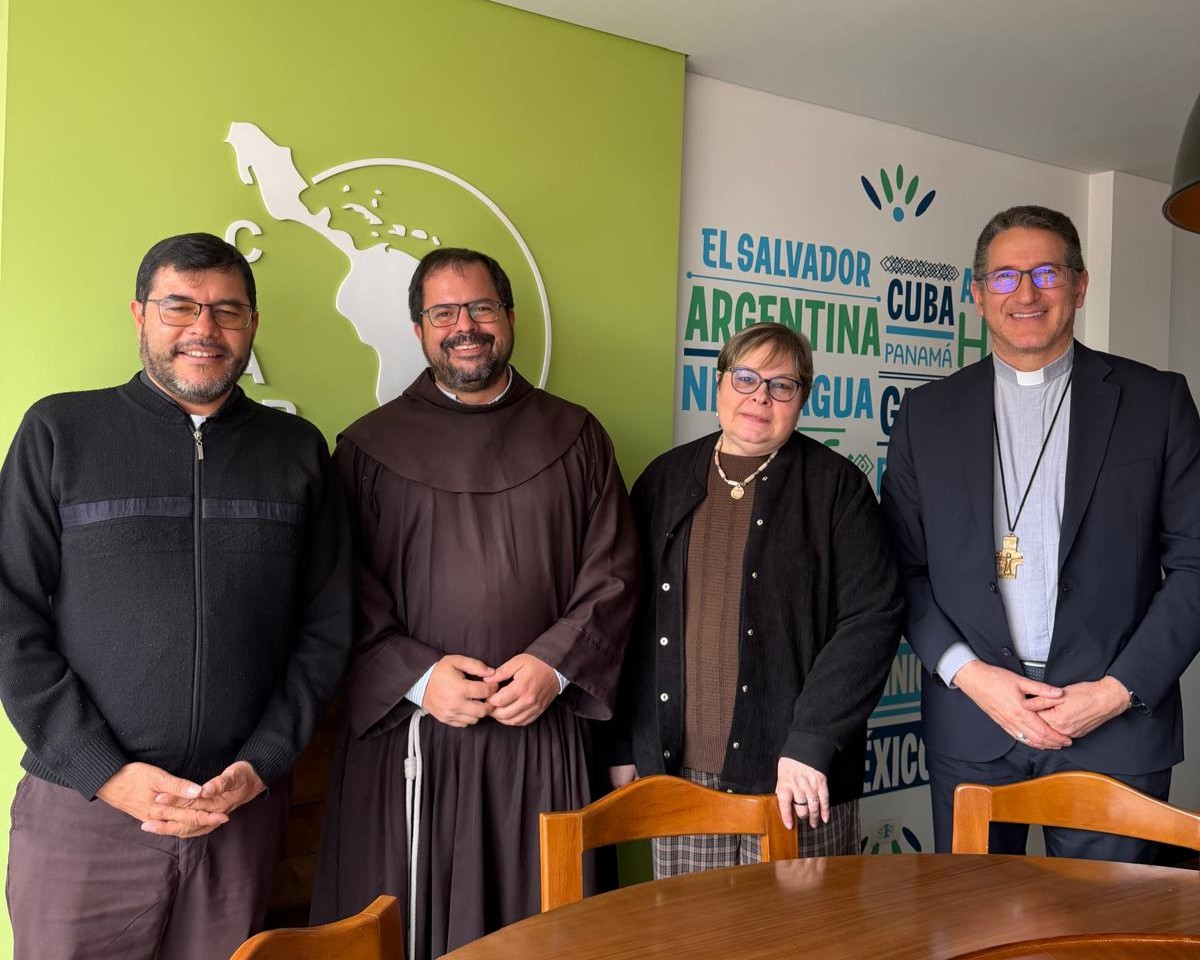
VATICAN CITY — The Pontifical Commission for the Protection of Minors is expanding its cooperation with episcopal conferences and regional Church organisations across Latin America to help local Churches develop sustainable safeguarding structures. Earlier this month, Content Manager William Roberts sat down with the Commission’s Secretary, Mons. Luis Manuel Alí Herrera, to discuss Tutela Minorum’s Memoranda of Understanding (MoUs) across the continent.
Many of these partnerships are formalised through Memoranda of Understanding (MoUs), collaborative instruments that provide a framework for cooperation between the Commission and local Church bodies. While not legally binding contracts, MoUs define shared objectives, clarify responsibilities and establish a roadmap for implementing safeguarding initiatives. By setting expectations from the outset, they help identify potential challenges, strengthen accountability and improve coordination while allowing the flexibility needed to respond to local circumstances. In this way, MoUs have become an important mechanism for building safeguarding capacity and encouraging long-term collaboration throughout the region.
Building stronger regional cooperation
At the heart of this work in Latin America is Memorare, the Commission’s capacity-building programme for Churches that lack the financial, technical or formation resources needed to establish effective safeguarding measures.
Mons. Alí Herrera explained that the initiative responds in particular to the requirements of Vos estis lux mundi, including the creation of systems for receiving reports of abuse and providing listening, support and accompaniment for victims, survivors and their families.
“Through our work, and particularly through the Annual Report, we realised that some Churches did not have the economic or formation resources they needed, and often lacked the capacity to build networks among themselves.” – Mons. Alí Herrera
Memorare addresses these challenges by working through episcopal conferences and other ecclesial structures to strengthen safeguarding at the national level, rather than focusing solely on individual dioceses or religious communities.
“The important thing is to develop this relationship as a network,” Mons. Alí Herrera said. “Memorare is not carried out with a single diocese or religious community. We work with the episcopal conference.”
From local initiatives to national systems
Mons. Alí Herrera pointed to Venezuela as an example of why a national approach can be so important.
While some religious communities, including the Augustinians and Jesuits, had developed considerable safeguarding expertise, capacity remained uneven across the country. Several dioceses had little established work in the field.
The challenge was to create a national framework through which institutions with greater experience could share knowledge and resources with those still developing their safeguarding systems.
Similar efforts are underway in Uruguay, Argentina, Honduras and Costa Rica, where the Commission is helping strengthen national safeguarding programmes and foster greater collaboration among Church institutions.
Building stronger regional cooperation
Mons. Alí Herrera identified closer collaboration among the Commission, the Latin American Episcopal Council (CELAM), the Latin American Confederation of Religious (CLAR) and national episcopal conferences as one of the principal challenges ahead.
“We need to develop the relationship among CELAM, CLAR, the different episcopal conferences and the Commission so that we can work together as a team.” – Mons. Alí Herrera
Greater coordination can help ensure that available resources are used as effectively as possible, particularly in areas such as formation and professional expertise, while expanding support services for victims and survivors.
Mons. Alí Herrera also stressed the importance of ongoing accompaniment for diocesan safeguarding offices. Establishing structures is only the beginning; continued engagement is needed to understand how those offices operate in practice and how effectively they respond to those seeking assistance.
Catholic schools represent another area of significant opportunity. Many already possess experience and institutional expertise that could contribute substantially to safeguarding efforts within dioceses and other Church structures.
Local leadership key to lasting progress
For safeguarding programmes to become sustainable, identifying committed local leaders is essential.
As Memorare projects develop, progress often depends on individuals willing to champion the work over the long term. These leaders are not always senior figures within episcopal conferences; they are often people working closer to the local context who understand the realities on the ground and can maintain momentum.
The experience in Haiti illustrates this challenge. The Commission initially struggled to identify a local partner capable of advancing the work before eventually finding Church leadership ready to engage with the programme.
For Mons. Alí Herrera, these experiences underscore a central principle behind the Commission’s efforts in Latin America: safeguarding structures must ultimately be rooted in the Churches and communities they are intended to serve.
The Commission’s role, therefore, is not simply to support individual projects but to connect institutions, strengthen local expertise and help develop national systems capable of sustaining safeguarding efforts over time.
As cooperation across Latin America continues to expand, Mons. Alí Herrera said the priority remains strengthening networks, deepening formation and accompaniment, and ensuring that safeguarding structures result in meaningful support for victims, survivors and their families.
0 Comments