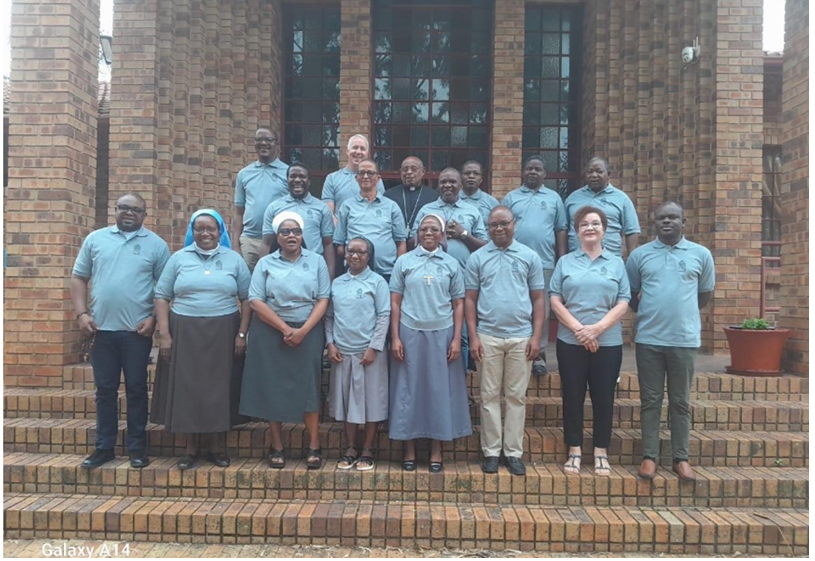
PRETORIA — Church leaders, safeguarding practitioners and pastoral workers from across Southern Africa gathered in Pretoria from 1 to 8 March for a regional training workshop aimed at strengthening child protection efforts through the Memorare Initiative. The workshop, organised by the Inter-Regional Meeting of the Bishops of Southern Africa (IMBISA), brought together 23 participants from nine countries, representing dioceses, safeguarding offices and Church institutions. It forms part of ongoing collaboration with the Commission to build safeguarding capacity across the region. Held at the Padre Pio Retreat Centre under the theme “Enhancing Child Protection through Training, Awareness and Advocacy in IMBISA,” the initiative focused on equipping participants with both the theological grounding and practical tools needed to implement safeguarding structures within their local contexts.
IMBISA brings together six Episcopal Conferences in Southern Africa and has prioritised safeguarding as a central element of its mission. The training reflected that commitment, offering a comprehensive programme that addressed prevention, response and long-term cultural change within the Church. Participants explored the role of the Memorare Initiative in strengthening safeguarding structures, alongside the theological and pastoral foundations underpinning the Church’s responsibility to protect the vulnerable. Discussions highlighted biblical perspectives on human dignity and the moral imperative to safeguard children and vulnerable adults. A significant portion of the workshop was dedicated to the development and implementation of safeguarding policies. Sessions examined how clear Codes of Conduct, aligned with the Universal Guidelines Framework, can support consistent practices across dioceses and institutions. Particular attention was given to protecting minors from all forms of abuse, including online harm, and to understanding the psychological, emotional and physical impact of abuse on victims and survivors.
Participants were also introduced to practical mechanisms for prevention, reporting and response. These included the establishment of safeguarding offices, structured reporting procedures and accountability systems designed to ensure transparency and justice in handling cases of abuse. Canon Law formed another key component of the training. An overview of Book VI provided participants with a clearer understanding of the Church’s legal framework in addressing cases of abuse and misconduct. The session was enriched by contributions from Fr. Eugenio Mutimucuio, a canon lawyer from Mozambique, who offered practical insights into the application of canonical norms. The importance of creating safe listening spaces for victims and survivors was emphasised throughout the workshop. Participants reflected on the need to foster environments of trust and compassion, supported by clear referral pathways to ensure access to pastoral, psychological and legal assistance.
Leadership emerged as a central theme, with participants recognising the responsibility of bishops, clergy, religious and lay leaders in promoting a culture of safeguarding. The presence of four bishops at the workshop added a strong pastoral dimension, with their active participation, including in role-play exercises, seen as a clear sign of commitment and leadership by example. The training also addressed broader human development topics, including human sexuality, gender dynamics and child development, highlighting their relevance to safeguarding practice and pastoral care. Participants engaged actively through group discussions, case studies and practical exercises, reflecting on the specific challenges faced within their dioceses and countries. As part of the programme, they began developing implementation plans to introduce or strengthen the Memorare Initiative locally.
A progress report from Namibia, presented by Deacon Afrikaner, offered practical insights into both the achievements and challenges of implementing safeguarding structures, providing valuable lessons for the wider region. Representatives of the Commission played a key role in facilitating the workshop. Sr. Theresa Nyadombo, African Regional Moderator, shared her experience in accompanying victims and survivors and presented the Universal Guidelines Framework. Br. Fortune Chakasara, Regional Expert for Africa, led sessions on the Memorare Initiative and safeguarding policy development, and co-facilitated discussions on Canon Law.
Participants also addressed cultural barriers that can hinder the reporting of abuse. Discussions highlighted how certain social attitudes may discourage disclosure and impede justice, underscoring the need to challenge harmful practices and promote environments where victims feel safe to come forward. At the conclusion of the workshop, participants and bishops expressed appreciation for the collaboration between the Commission and the local Church in the IMBISA region. The training was widely seen as an important step in strengthening safeguarding structures and fostering a culture of protection. A shared conclusion emerged from the gathering: safeguarding is essential to the life and mission of the Church, a sine qua non without which that mission cannot be fully realised. Participants affirmed the need for continued collaboration among Church leaders, clergy, religious and lay faithful to ensure the dignity and safety of all, especially children and vulnerable persons.
0 Comments